Graphic Design Trends Shaping the Future of Visual Creativity
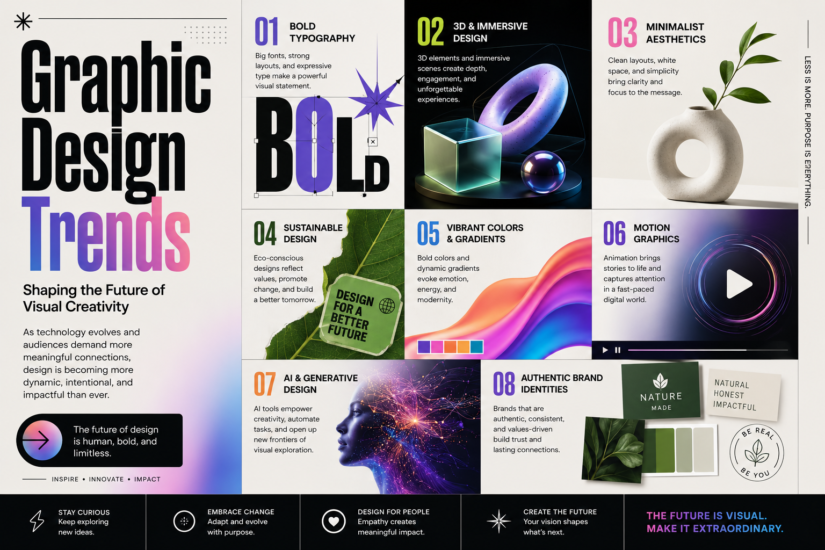
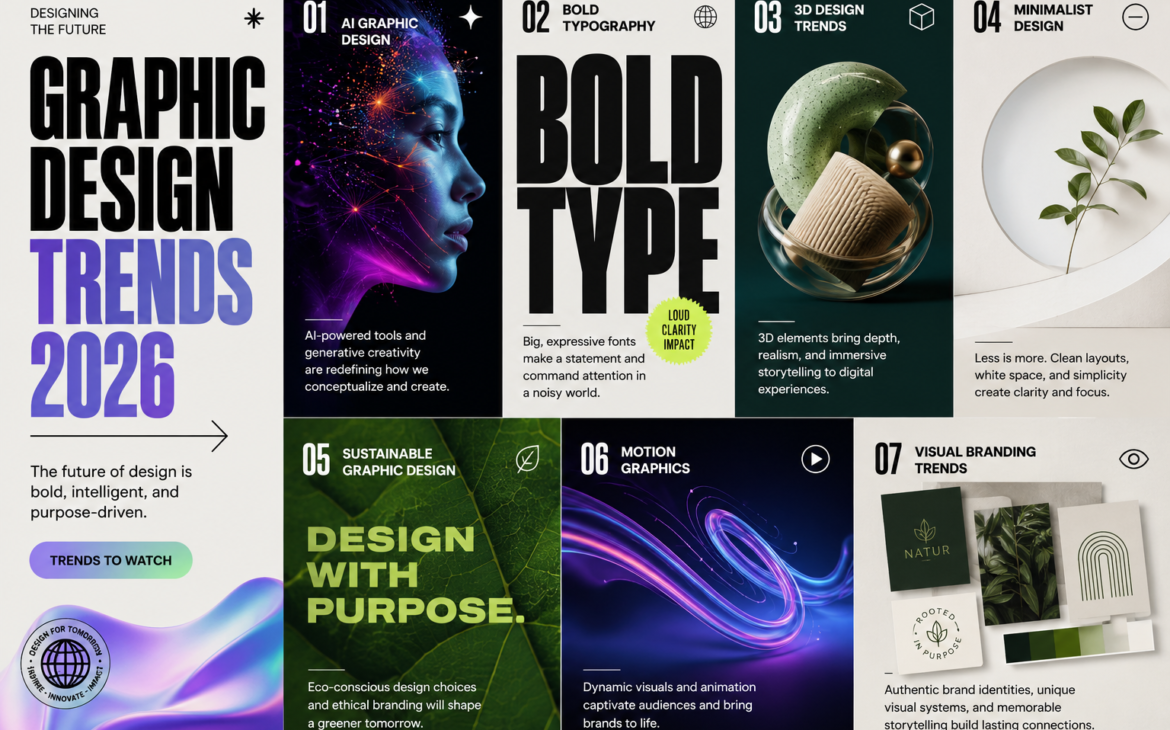
Graphic design is changing at lightning speed, driven by technological advancements, shifts in consumer behaviour, and growing demand for brands to communicate meaningfully. As we look ahead to 2026 and beyond, design is evolving beyond mere aesthetics—it’s all about creating experiences, making an impact, and having a purpose. From AI-driven creativity to sustainable visual storytelling, the latest graphic design trends are reshaping how brands engage with their audiences.
In this blog, we’ll explore five key graphic design trends that are revolutionising the creative landscape and setting new benchmarks for visual communication.
AI-Assisted Design & Generative Creativity
Artificial Intelligence has emerged as a dynamic collaborator in the world of graphic design. With AI-powered tools, designers can quickly generate ideas, layouts, colour schemes, and illustrations in seconds. Rather than detracting from creativity, AI enhances it by automating repetitive tasks and accelerating the design process.
Generative design allows designers to set parameters such as mood, style, or brand identity, and AI can generate a variety of creative options instantly. This opens the door to faster experimentation, improved personalisation, and data-driven creativity. Brands can now craft customised visuals for different audiences without starting from scratch each time.
AI also helps enhance images, remove backgrounds, pair typography, and resize images for various platforms. As AI technology continues to advance, designers who adopt these tools will gain a competitive advantage, delivering high-quality designs more efficiently.
Bold & Experimental Typography
Typography has evolved into much more than just a way to convey information—it’s now a key visual component. Bold, oversized, and experimental typography is all the rage as brands strive to make their mark in a bustling digital landscape. Designers are getting creative with custom fonts, variable typefaces, and unique layouts to craft striking visual narratives.
This experimental approach often tosses traditional rules out the window, with overlapping letters, playful spacing, and a mix of font styles all coming together in one design. The result? A powerful emotional connection that really showcases a brand’s personality. In branding and social media, typography takes centre stage, becoming the star of the show.
Thanks to variable fonts, designers can tweak weight, width, and style on the fly, making typography more adaptable and responsive across various devices. This trend is particularly appealing to digital-first brands seeking to project a modern, expressive, and bold image.
3D, Immersive & Motion-Based Visuals
Moving on to visuals, static designs are slowly being replaced by dynamic, immersive experiences. 3D elements, motion graphics, and animated interfaces are becoming the norm across websites, apps, ads, and social media.
3D visuals add depth, realism, and engagement to designs, making them not only eye-catching but also memorable. Motion-based design—think micro-animations and animated logos—enhances user experience by directing attention and enriching storytelling.
Immersive visuals are also crucial in brand marketing, product visualisation, and explainer content. With the rise of AR, VR, and interactive web design, motion and 3D graphics enable brands to create experiences that resonate rather than merely deliver visuals.
As our attention spans dwindle, animated and immersive designs are proving to be more effective at grabbing and holding audience interest.
Minimalist Layouts with Strong Contrast
Minimalism remains a significant force in graphic design, but it has evolved into something more dynamic. Nowadays, minimalist designs emphasise clarity, contrast, and visual hierarchy rather than being plain and simple. You’ll find clean layouts, generous white space, and a limited colour palette, paired with bold contrasts, to create designs that make a real impact.
Strong contrast—whether through varying type sizes, colour combinations, or element positioning—helps direct the viewer’s attention and enhances readability. This trend aligns well with digital interfaces, where users value quick, intuitive navigation.
Minimalist layouts also boost brand credibility by conveying a professional, premium, focused vibe. They let key messages shine without distractions, making them perfect for websites, branding, presentations, and corporate communication.
In a world overflowing with information, minimalism combined with contrast offers clarity and confidence.
Sustainable & Purpose-Driven Design
Sustainability has grown beyond just a trend; it’s now a responsibility we all share. Purpose-driven graphic design emphasises ethical messaging, environmental consciousness, and social impact. More and more brands are using design to express their values, transparency, and commitment to sustainability.
This trend features eco-friendly colour palettes, natural textures, organic shapes, and visuals inspired by nature. Designers are also taking steps to minimise digital waste by optimising file sizes and creating enduring design systems instead of throwaway visuals.
Purpose-driven design transcends mere aesthetics; it tells meaningful stories that resonate emotionally with audiences. Today’s consumers are drawn to brands that reflect their values, and thoughtful design is crucial in building that trust.
Sustainable design isn’t just about looking eco-friendly—it’s about creating with intention and responsibility.
Frequently Asked Questions (FAQs)
1. Why is AI important in modern graphic design?
AI helps streamline the design process, boosts efficiency, and enables designers to focus on creativity and strategy rather than repetitive tasks.
2. Is experimental typography suitable for all brands?
Not every brand can pull it off, but it shines for those in creative fields, fashion, tech, and brands targeting a younger audience that crave a bold and expressive identity.
3. Are 3D and motion graphics expensive to implement?
Thanks to modern tools and software, creating 3D and motion visuals is more accessible and cost-effective than ever.
4. Why is minimalism still popular in graphic design?
Minimalism enhances clarity, user experience, and visual focus, making designs more impactful across various digital platforms.
5. How does sustainable design benefit brands?
It fosters trust, enhances brand reputation, and resonates emotionally with consumers who care about the environment.
Conclusion
Graphic design is entering a new era where creativity blends seamlessly with technology and purpose. AI-assisted design, striking typography, immersive visuals, minimalist layouts, and sustainable practices aren’t just fads—they’re paving the way for the future of visual communication.
Brands that embrace these trends can forge deeper connections, convey powerful messages, and maintain a competitive edge in the ever-evolving digital landscape. As design continues to progress, the most successful visuals will be those that are innovative, meaningful, and centred around human experiences.
Thank you for reading
Buy Web Hosting at an affordable price: Buy Now.
If you want to build your website at an affordable price, contact www.nextrtechnology.com
Read more blogs: https://www.nextrtechnology.com/blog/