Quantum computing is becoming one of the exciting developments in the global technology industry. As businesses researchers and technology companies look for more powerful ways to solve complex problems quantum processors are opening new possibilities beyond traditional computing.
IBM Newsroom
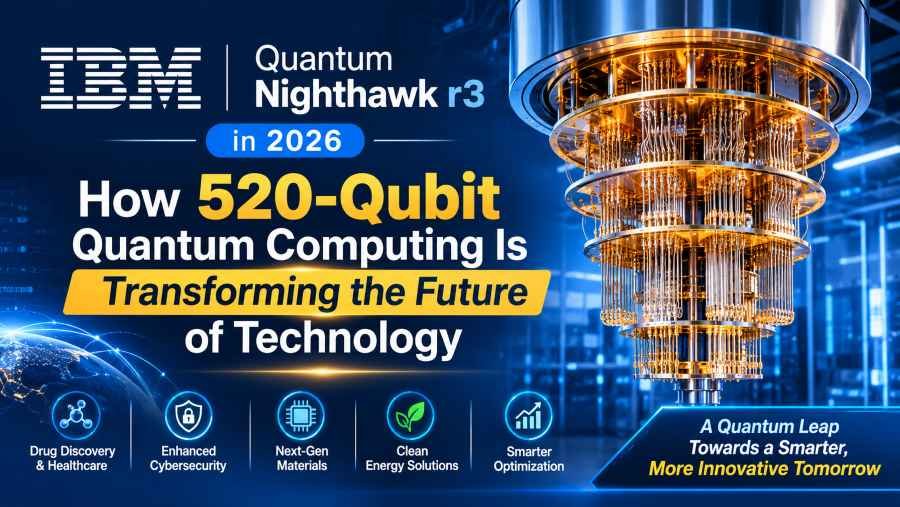
On November 11 2026 IBM announced its next‑generation IBM Quantum Nighthawk r3 processor, designed to execute 10,000 quantum operations across 520 qubits. This development is a step toward building larger and more capable quantum computing systems. IBM also revealed plans to connect two Nighthawk r3 processors in 2027 creating a system with 1,040 qubits. The announcement shows how quantum technology is becoming more important in research, artificial intelligence, cybersecurity, healthcare and advanced computing. With improvements in quantum hardware and software the future of computing could become much more powerful, efficient and innovative. IBM Newsroom
What Is IBM Quantum Nighthawk r3 and How Does Its 520‑Qubit Technology Work?
IBM Quantum Nighthawk r3 is a next‑generation quantum processor made to perform calculations using quantum mechanics. Unlike computers that use binary bits of 0 and 1 quantum computers use quantum bits called qubits. Qubits can exist in states at once thanks to a property called superposition. Another key property, quantum entanglement lets connected qubits share relationships that normal computers cannot explain. These features allow quantum computers to solve problems in a completely new way.
The important feature of IBM Quantum Nighthawk r3 is its design for 520 programmable qubits and 10,000 quantum operations. IBM has also specified 2,034 physical qubits in the processor design. These figures represent aspects of the hardware and should not be confused. The larger architecture is intended to support complicated quantum circuits while maintaining computational accuracy and performance. The processor also keeps the square‑lattice connectivity from the Nighthawk architecture. Adds 10 chip‑to‑chip interconnects called l‑couplers. These connections help link processors and grow the power of quantum computing systems. IBM Newsroom
Another important development is IBM’s plan to connect two Nighthawk r3 processors into a system with 1,040 programmable qubits in 2027. This modular approach could help researchers build quantum systems without relying on just one processor. IBM is also working on quantum computing, which aims to detect and fix errors that naturally happen during quantum calculations. Better connectivity, higher processor quality and stronger error correction will be key to making computers useful in real life.
How Quantum Computing Is Transforming Artificial Intelligence, Healthcare and Business Technology
Quantum computing can change industries by helping researchers tackle complex problems that normal computers find hard. One promising area is intelligence. Modern AI systems need a lot of computing power to train models, analyse data and process datasets. Quantum computing research could bring ways to optimise learn and run scientific calculations. Although quantum computers are not yet a replacement for normal AI hardware pairing quantum processors with classical high‑performance computers can open up new possibilities for advanced workflows.
Healthcare and pharmaceutical research are key areas where quantum technology could help. Creating medicines means analysing molecular structures, chemical interactions and biological processes. These calculations become very complex when researchers look at molecular systems. Quantum computing could eventually allow scientists to simulate how molecules behave and study chemical properties with methods. These advances could aid drug discovery, materials research and new medical technologies.. Real healthcare uses will need better hardware accuracy, bigger scale and stronger error correction.
The financial services industry could also gain from quantum computing research. Financial organisations often analyse amounts of data to manage risk, assess investment strategies and optimise portfolios. Some optimisation problems may fit well with quantum algorithms. Likewise logistics and transportation firms might look at quantum‑based methods for route planning, scheduling and resource management. Manufacturing companies could use material simulations and production optimisation with quantum help.
Cybersecurity is another area linked to quantum technology. Powerful quantum computers make researchers look at how current encryption methods might be affected. This has raised interest in post‑quantum cryptography, which aims to create encryption that can stand against quantum attacks. Businesses and tech organisations need to understand these changes and get their digital systems ready, for security needs.
I see IBMs quantum computing strategy as a plan to mix quantum processors with powerful classical high‑performance computers through its Quantum Platform. This hybrid method lets researchers align computing technologies with the needs of their workloads. I believe this direction is vital because real quantum applications will need more than strong processors; they will also need software, data processing, error mitigation and classical computing help. IBM Newsroom
The Future of Quantum Computing in 2027: Opportunities, Challenges and Emerging Technologies
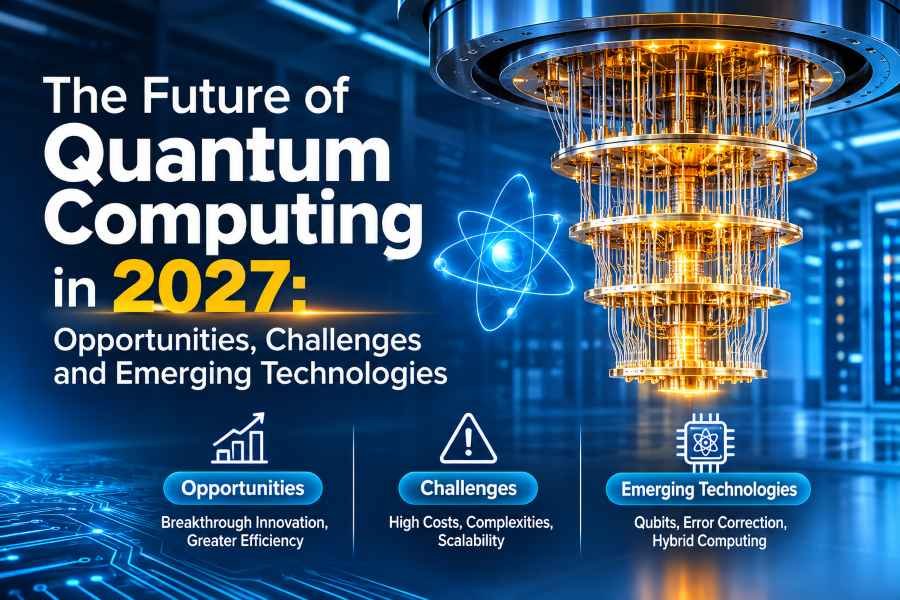
I think the future of quantum computing will rely on processor architecture, higher computational accuracy, stronger connectivity and stronger error correction. IBMs Nighthawk r3 announcement shows that the industry is moving toward quantum processors that can manage more complex workloads. IBMs planned 1,040‑qubit system for 2027 is a step in scalable quantum computing. Yet simply adding qubits does not ensure better real‑world performance. Quantum processors must also keep operations cut errors and give reliable results for tough calculations.
A major challenge is quantum error correction. Qubits are very fragile. Can be disturbed by the environment, which can lower calculation accuracy. Researchers are creating methods to spot and fix these errors while keeping the quantum information needed for computation. Stronger processor connectivity and better control systems will also be key for building quantum machines. These improvements could eventually allow dependable quantum applications in science and industry.
Software development is also a part of adopting quantum technology. Developers will need programming frameworks, quantum algorithms and simulation tools to build applications for quantum processors. Platforms like IBM Quantum help researchers and developers try out quantum computing and learn its real‑world abilities. Businesses may also need people who know algorithms, artificial intelligence, cybersecurity, cloud computing and advanced mathematics as this technology grows.
For technology companies those working in software development AI integration and digital transformation learning about quantum computing can give useful insights into future technology trends. It is important to recognise that quantum computing remains an emerging field and is not yet fit for every business problem. Still ongoing investment and research could create chances in scientific discovery, advanced computing and enterprise innovation.
As the technology moves toward 2027 and beyond, teamwork between hardware makers, software developers, research institutions and businesses will be crucial. IBM Quantum Nighthawk r3 is a step in this journey showing how larger processors stronger connectivity and hybrid computing can shape the next wave of digital innovation.
Conclusion
IBM Quantum Nighthawk r3 is a milestone in next‑generation quantum computing. IBM Quantum Nighthawk r3s design supports 520 qubits and 10,000 quantum operations showing that the industry is focusing on larger and stronger quantum processors. IBMs plan to join two processors into a 1,040‑qubit system in 2027 highlights the promise of quantum architectures. From intelligence and healthcare to cybersecurity, financial services and scientific research quantum computing can bring new ways to solve complex computational problems. Even though technical limits such as errors, hardware stability and scalability still exist ongoing research is moving the industry toward practical quantum applications. Businesses and technology professionals should keep up with these changes to see how emerging technologies can shape the future of computing and digital transformation. Stay connected with Nextr Technology for the news on artificial intelligence, quantum computing, software development and emerging global technology trends.
Frequently Asked Questions (FAQs)
1. What is IBM Quantum Nighthawk r3?
IBM Quantum Nighthawk r3 is a next‑generation quantum processor announced on November 11 2026. It is built to run 10,000 quantum operations across 520 qubits for complex computational tasks.
2. What makes the IBM Nighthawk r3 processor different?
IBM Quantum Nighthawk r3 has features: 520 programmable qubits, the ability to perform 10,000 quantum operations 2,034 total physical qubits and 10 chip‑to‑chip interconnects known as l‑couplers.
3. What is the difference between quantum computing and traditional computing?
Traditional computers use bits that are either 0 or 1 while quantum computers use qubits that can use quantum properties like superposition and entanglement to process information in a different way.
4. How can quantum computing benefit intelligence and healthcare?
Quantum computing research can help with advanced optimisation machine learning experiments, molecular simulations, drug discovery and complex scientific calculations.
5. What is the future of quantum computing, in 2027?
Quantum computing is expected to grow with processors, better connectivity, stronger error correction and hybrid quantum‑classical computing systems. IBM plans to link two Nighthawk r3 processors into a 1,040‑qubit system in 2027.
Thank you for reading
Buy Latest Tech Gadgets and Laptops: Click Here
Buy Web Hosting at an affordable price: Buy Now.
If you want to build your website at an affordable price, contact www.nextrtechnology.com
If you want to build your website at an affordable price, contact www.nextrtechnology.com
Read more blogs: https://nextrtechnology.com/blog/