AI Smart Glasses Are Booming in 2026 — And So Is the Backlash Against Them
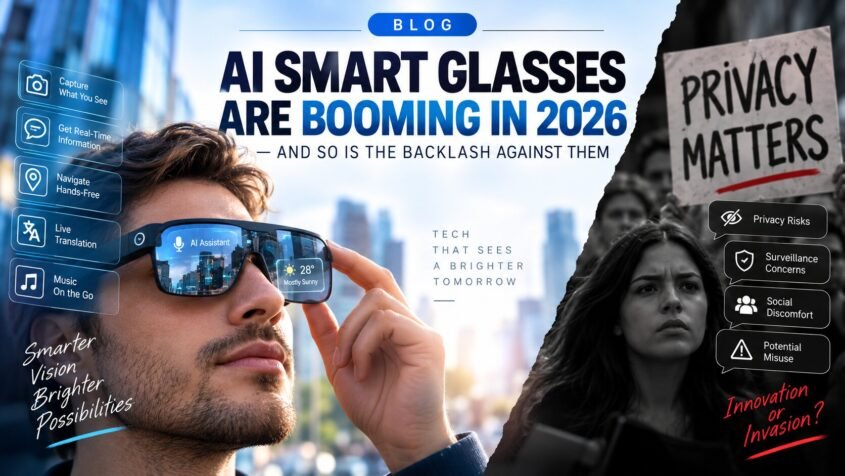
Smart glasses have quietly become one of the fastest-growing categories in consumer tech. What was a niche gadget just two years ago is on pace to nearly triple in unit sales in 2026, and nearly every major tech company, from Meta to Google to Samsung to Apple, is now racing to stake a claim in a category some believe could eventually rival the smartphone as the primary way people interact with AI.
Unit sales are set to triple this year as Meta, Google, Samsung, and Apple race to build the next computing platform. But facial recognition plans and non-consensual recording concerns are triggering court bans and a coordinated privacy revolt.
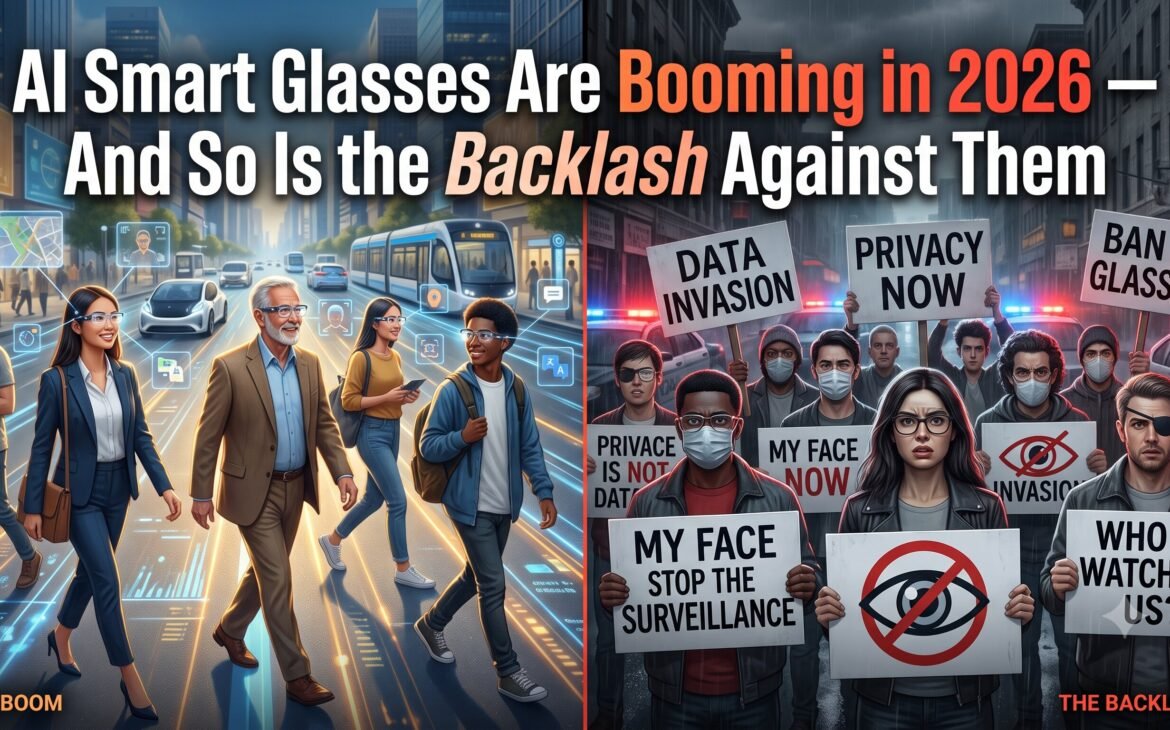
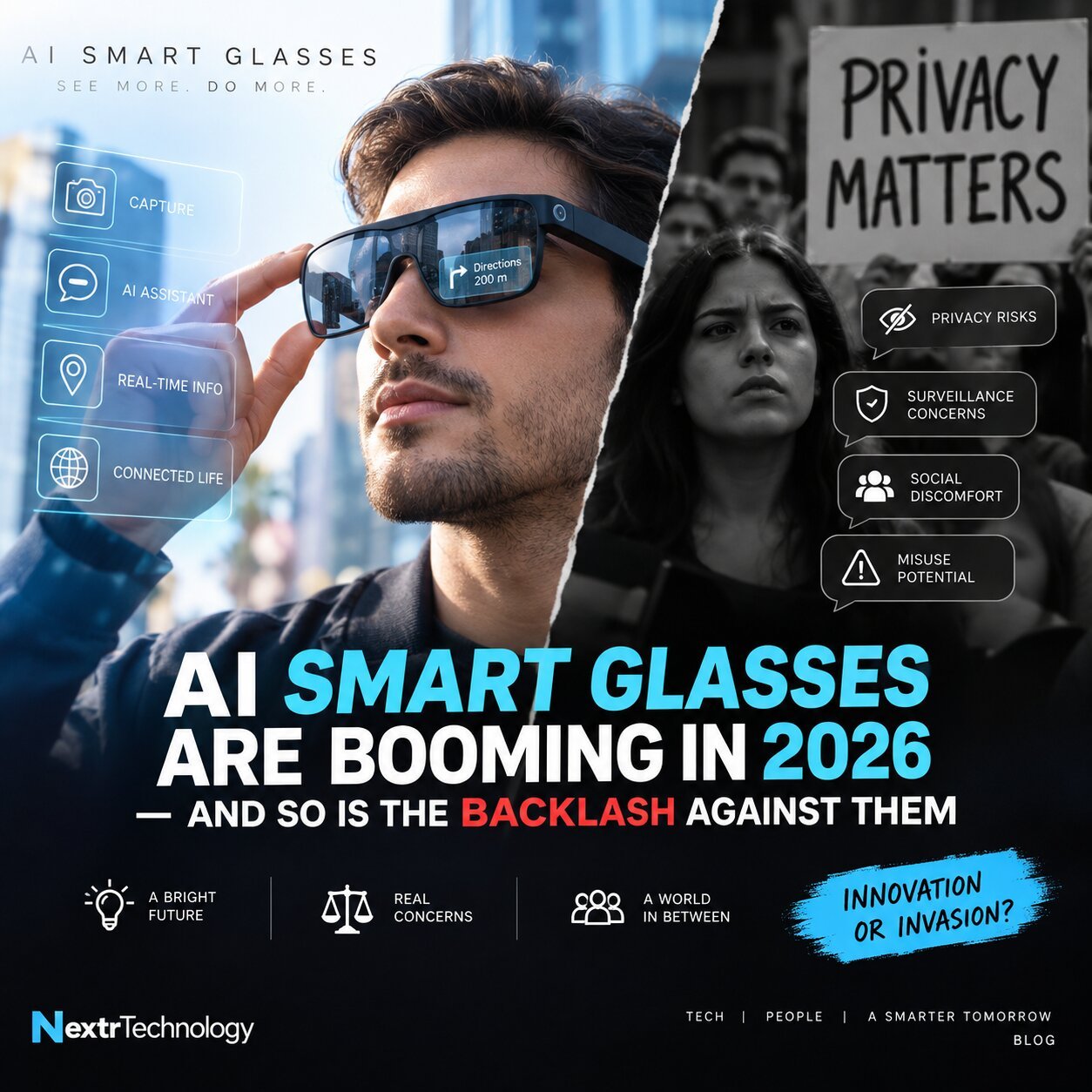
But the same features driving that growth- always-on cameras, AI-powered scene understanding, and the ability to identify what’s in front of you- are also fueling one of the sharpest privacy backlashes in recent tech history. Courts are banning them, civil liberties groups are demanding regulators intervene, and a proposed facial recognition feature has become a genuine flashpoint. Here’s where the smart glasses market actually stands in 2026, and why the fight over what these devices are allowed to do might shape the category as much as the hardware itself.
Quick facts
- The AI smart glasses market is projected to grow from roughly 6 million units in 2025 to around 20 million units in 2026.
- Meta currently dominates the category, with prices ranging from $299 to $799 across four product lines.
- Google’s Gemini-powered Android XR glasses, co-developed with Samsung, are expected to launch in fall 2026.
- New York banned recording-enabled smart glasses and headwear in all state courts starting July 20, 2026.
- More than 70 civil liberties organisations have urged Meta to abandon reported facial recognition plans for its glasses.
From Novelty to Mainstream: The Numbers
Two years ago, smart glasses were a curiosity mostly associated with awkward early Google Glass memories. That’s changed fast. According to Smart Analytics Global estimates, the category is projected to grow from about 6 million units sold in 2025 to roughly 20 million units in 2026, more than tripling in a single year. Meta alone reportedly sold over 7 million pairs of its Ray-Ban smart glasses in 2025.
That growth has real momentum behind it. Meta now sells four distinct product lines spanning $299 to $799, giving it options for casual users, athletes, content creators, and early adopters. The company has also moved to control the brand, pricing, and product story directly, rather than simply licensing the Ray-Ban name, a signal of how central the category has become to its broader strategy after roughly five years of development.
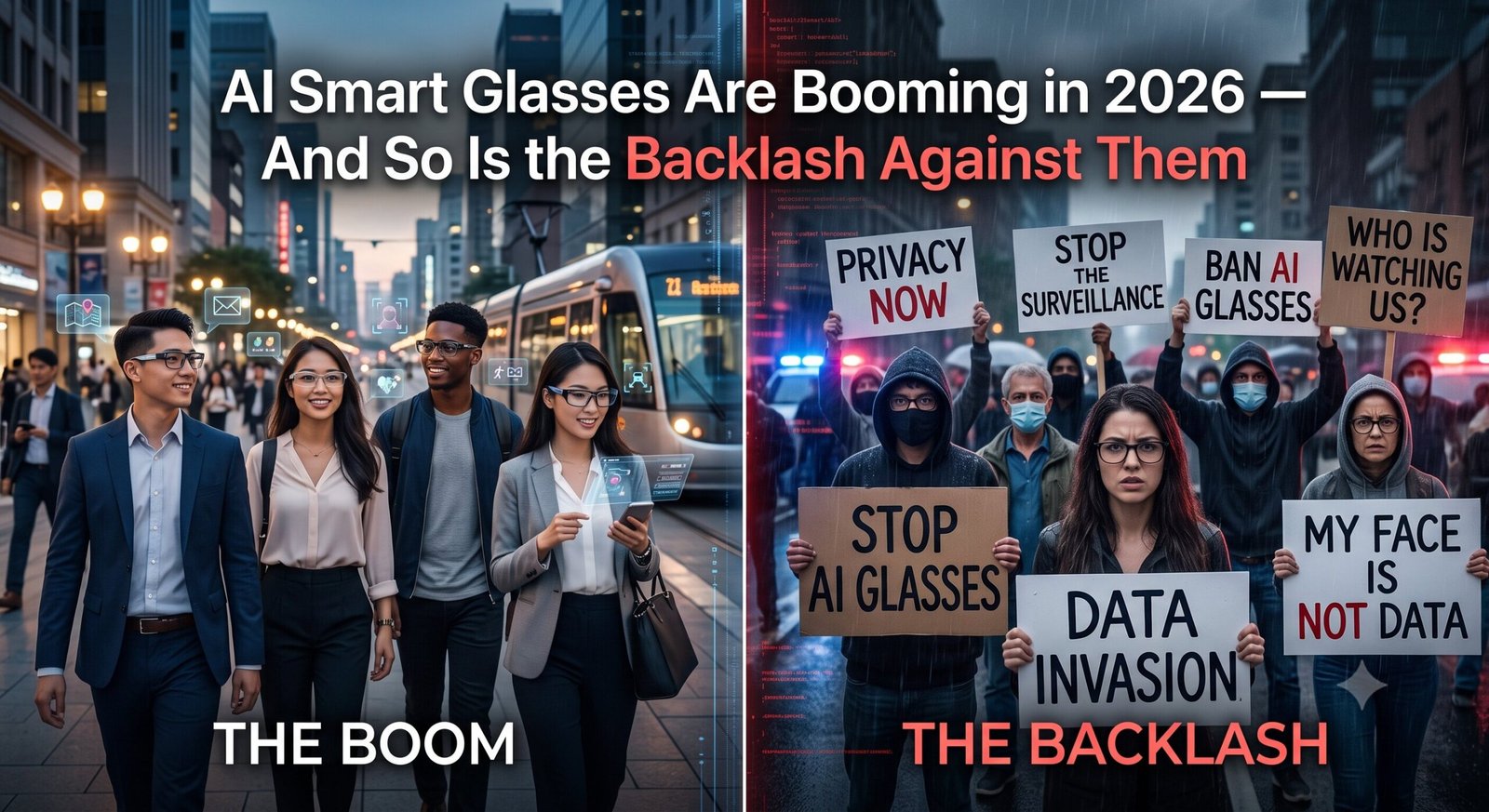
Meta’s Head Start
Meta currently has the most mature lineup in the category, built around a clear tiering strategy. The entry-level Meta Glasses start at $299, and the Ray-Ban Meta Gen 2, widely considered the best all-around option for most buyers, starts at $379 with a 12-megapixel camera, a five-microphone array, open-ear speakers, and Meta AI built in, but no display.
At the top of the range sits the Meta Ray-Ban Display, priced at $799. It’s the first mainstream smart glasses to include a full-colour, in-lens display, paired with a wristband called the Meta Neural Band that reads subtle hand gestures to control the interface without touching the glasses themselves. Since launching in the US in September 2025, Meta has been expanding the Display model internationally, though a planned rollout to Canada, France, Italy, and the UK was paused earlier in 2026 due to limited inventory. Meta has also introduced a prescription-first line, the Ray-Ban Blayzer Optics and Scriber Optics, starting at $499, aimed at everyday, all-day wear rather than tech-first design.
The Competition Is Finally Arriving
For most of the category’s early growth, Meta had the market largely to itself. That’s changing in 2026. Google announced Gemini-powered Android XR glasses at its I/O developer conference, co-developed with Samsung and eyewear brands Warby Parker and Gentle Monster, with a launch expected this fall. Samsung showed its own Intelligent Eyewear publicly on July 22, 2026, though pricing and exact release timing haven’t been confirmed. Apple, notably absent from the category so far, is reportedly preparing its own smart glasses for a 2027 launch, which would give it the tightest potential integration with the iPhone of any option on the market.
In a genuinely ironic twist, a smaller company beat Google to its own milestone: Rokid’s lightweight display glasses became the first to natively run Google’s Gemini AI through a March 2026 software update, arriving months ahead of Google’s own branded Android XR hardware. It’s an early sign that the smart glasses race may not simply mirror the smartphone platform wars, where hardware and software from the same company always launch together.
Why Everyone’s Betting This Is the Next Computing Platform
The reason so many companies are pouring resources into smart glasses comes down to a simple bet: glasses put a camera, a microphone, and increasingly a display, directly in your natural field of view, letting an AI assistant see and hear what you see and hear without you pulling out a phone. That’s a fundamentally different interaction model than tapping a screen, and companies like Meta, Google, and Samsung are betting it could eventually become as central to daily life as smartphones are now. Whether that bet pays off depends heavily on whether the hardware, battery life, and AI capabilities can mature fast enough to justify the shift, and whether the public actually wants an AI system watching what they see.
The Other Side: A Growing Privacy Backlash
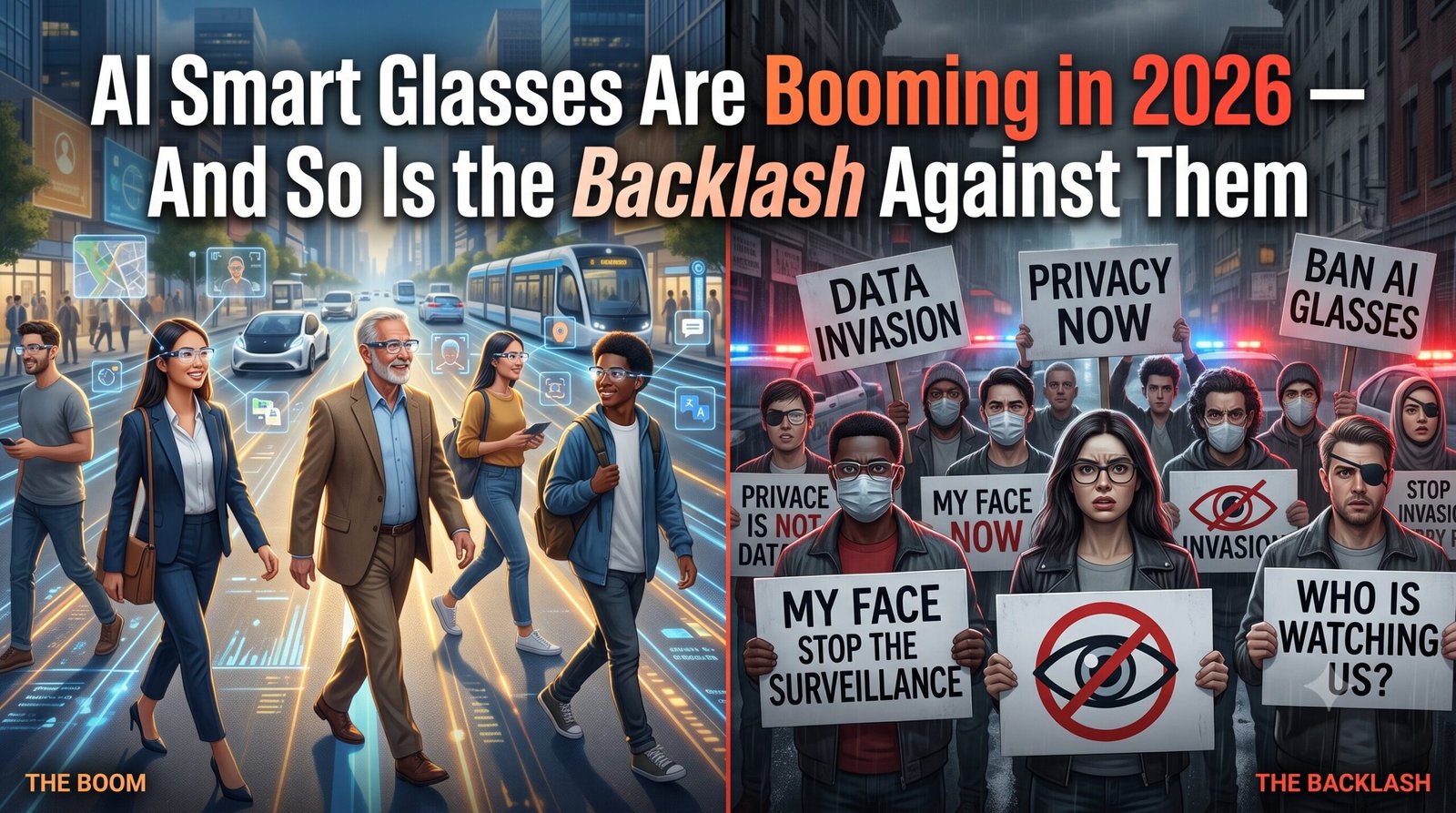
That last question is where things get complicated. Reports that Meta is internally developing a facial recognition feature, reportedly codenamed “Name Tag,” that could let wearers identify strangers in public, have triggered a sustained backlash. More than 70 civil liberties and privacy organisations, including the ACLU, the Electronic Privacy Information Centre, and Fight for the Future, have sent letters to Meta demanding the company halt and publicly disavow the feature, arguing it could enable stalking, harassment, and surveillance at a scale existing laws weren’t built to address. EPIC has separately petitioned the Federal Trade Commission and several state attorneys general to investigate and block the feature before it reaches consumers.
The backlash isn’t purely hypothetical. Existing Ray-Ban Meta glasses, which already let people record video with only a small LED light indicating capture is happening, have drawn criticism over non-consensual filming, with wearers picking up unflattering nicknames in some online communities. Reports have also surfaced that contractors reviewing footage captured by the glasses encountered sensitive personal moments, raising questions about how recorded footage is handled internally. New York responded concretely: starting July 20, 2026, the state banned recording-enabled eyewear and headwear across more than 1,240 state, county, city, town, and village courts, citing concerns about surreptitious recording of court proceedings.
What This Means Going Forward
The smart glasses category is now caught between two forces pulling in opposite directions: a genuine wave of consumer demand and cross-industry investment betting this becomes the next major computing platform, and a mounting legal and regulatory response to exactly the features that make the category compelling in the first place. How companies navigate that tension, whether by dropping contested features like facial recognition, building in stronger consent signals, or accepting narrower use restrictions in places like courtrooms, will likely shape the next generation of hardware as much as camera quality or battery life will. For now, the category keeps growing fast in raw sales numbers, even as the rules governing what these devices are allowed to do are still very much being written in real time.
Conclusion
Smart glasses are having a genuine breakout moment in 2026, backed by real sales growth, an expanding field of serious competitors, and a shared bet across the industry that always-available AI, worn on your face, is where computing is headed next. But the same capabilities driving that excitement- cameras that see what you see and AI that could eventually recognise who you’re looking at- have triggered one of the most organised privacy pushbacks any wearable category has faced.
Whether smart glasses become the next smartphone or get reined in first by courts, regulators, and public pressure is genuinely still an open question. What’s clear is that the companies building this category can’t treat growth and trust as separate problems for much longer; they’re the same problem, and 2026 is the year that became impossible to ignore.
Frequently Asked Questions
How big is the AI smart glasses market in 2026?
The category is projected to grow from roughly 6 million units sold in 2025 to around 20 million units in 2026, according to Smart Analytics Global estimates, with Meta alone reportedly selling over 7 million pairs of its Ray-Ban smart glasses in 2025.
What’s the difference between Meta’s smart glasses models?
Meta sells four main lines: the entry-level Meta Glasses at $299, the Ray-Ban Meta Gen 2 at $379 (camera and AI, no display), the Ray-Ban Blayzer and Scriber Optics prescription line starting at $499, and the Meta Ray-Ban Display at $799, which adds an in-lens screen controlled by a gesture-reading wristband.
When are Google’s smart glasses coming out?
Google’s Gemini-powered Android XR glasses, co-developed with Samsung and eyewear brands Warby Parker and Gentle Monster, are expected to launch in fall 2026, though an exact date hasn’t been confirmed.
Is Apple making smart glasses?
Reports indicate Apple is developing its own smart glasses, expected to launch in 2027, which would likely offer close integration with the iPhone.
Why are smart glasses facing a privacy backlash?
Reports that Meta is developing a facial recognition feature that could let wearers identify strangers in public triggered letters from more than 70 civil liberties groups urging the company to abandon the plan, alongside broader concerns about non-consensual recording and how captured footage is reviewed and stored.
Have any smart glasses actually been banned?
Yes, in a limited context. New York banned recording-enabled eyewear and headwear, including smart glasses, from all state courts starting July 20, 2026, to prevent unauthorised recording of court proceedings. It’s a narrow, location-specific ban rather than a broader consumer ban.
Thank you for reading
Buy Latest Tech Gadgets and Laptops: Click Here
Buy Web Hosting at an affordable price: Buy Now.
If you want to build your website at an affordable price, contact www.nextrtechnology.com
If you want to build your website at an affordable price, contact www.nextrtechnology.com
Read more blogs: https://www.nextrtechnology.com/blog/