Google Ranking Factors You Should Focus on in 2026
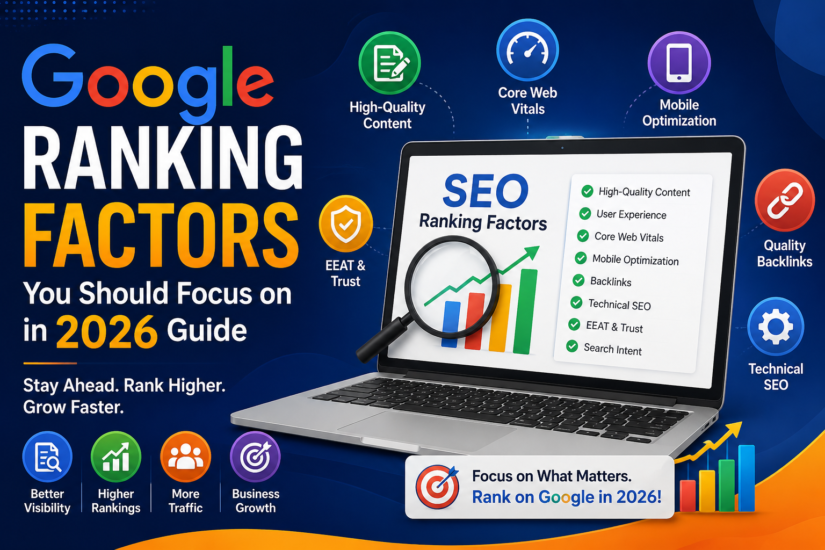
Google’s ranking algorithm is always changing, which makes it harder to get a ranking. In 2026, getting on the first page of Google is not just about using the right words. Google ranking is about making valuable content, giving users a great experience, building authority and keeping your website running smoothly. Because artificial intelligence is being used more and more in search, businesses need to change their search engine optimisation strategies to stay visible. Whether you have a website, blog, online store or service website, knowing Google’s ranking factors can help you get more people to visit your site and turn them into customers.
Google ranking factors you should focus on in 2026.
1. Content That Helps Users
Google Ranking Factors like content are still very important.
Google now likes content that really helps users, not pages made to get a good ranking.
Good content should:
Answer all of the users’ questions.
Be original and well researched.
Have practical examples
Be updated often
Not have many keywords.
Match what the user is looking for
You should write for people, not just for Google.
For example, if someone searches for “how to make my website faster “, your article should give them steps to follow, tools to use, mistakes to avoid and answers to frequently asked questions. Do not just repeat the keywords.
2. Understanding What Users Are Looking For
Understanding what users are looking for is a ranking factor in 2026.
Google checks if your content is what the user is really looking for.
There are four types of searches:
Looking for information
Trying to find a specific website
Researching a product
Wanting to buy something
If your content matches what the user is looking for, they will engage with it more, and your ranking will improve.
3. EEAT. Experience, Expertise, Authority, Trust
Google thinks EEAT is very important.
Websites that show they have experience and expertise in a subject are more likely to rank.
You can improve your EEAT by:
Adding author profiles
Showing your credentials
Citing sources
Displaying customer reviews
Adding your business contact information
Keeping your content updated
Building trust is especially important for industries like healthcare, finance and education.
4. Core Web Vitals and Page Experience
How fast and smooth your website is still affects your ranking.
Core Web Vitals measure how quickly and smoothly your website loads.
You should focus on:
Fast-loading pages
Stable page layout
Quick interaction time
design
Optimized images
Clean code
A faster website not only ranks better but also keeps users on your site longer and helps them become customers.
5. Mobile-First Optimisation
Most people now search on their phones.
Google looks at the version of your website first, so you need to make sure it is optimised for mobile.
Your website should:
Load quickly on phones.
Use design
Have text that is easy to read
Be easy to navigate
Have buttons that are easy to click
Not have pop-ups that get in the way.
A mobile-friendly website improves both your ranking and user satisfaction.
6. High-Quality Backlinks
Backlinks are still one of Google’s ranking signals.
It is the quality that matters, not the quantity.
You can build backlinks by:
Guest posting
Digital PR
Partnering with businesses
Doing original research
Creating infographics
Writing valuable blog posts
Do not buy backlinks that are not good because they can hurt your ranking.
7. Technical SEO
Even if you have content, if your website has technical issues, it will not rank well.
Technical SEO makes sure search engines can find and index your website.
The key technical factors are:
XML sitemap
Robots.txt optimization
HTTPS security
Structured data
Canonical URLs
Fixing broken links
Monitoring crawl errors
redirects
Regular technical audits keep your website running smoothly.
8. AI-Optimized Content
Artificial intelligence is changing how Google understands searches.
Google rewards content that:
Answers follow-up questions
Covers topics comprehensively
Uses language
Includes related keywords
Provides context rather than repeating the same thing
Instead of writing many thin pages targeting similar keywords, create comprehensive topic clusters.
9. Using Keywords Naturally
Keywords are still important. Using too many is not good.
The best way to use keywords is to:
Use the keyword naturally.
Include related keywords
Optimize titles
Write descriptive descriptions
Use keywords in headings.
Add keywords to image descriptions.
Your content should be easy to read and understand and not just be about keywords.
10. Internal Linking Strategy
Internal links help Google understand your website structure.
The benefits of links are:
Better crawlability
Improved user navigation
Increased page authority
Longer session duration
Link related articles whenever possible to create topic clusters.
11. Structured Data
Structured data helps search engines understand your content better.
Popular types of data are:
FAQ Schema
Article Schema
Product Schema
Organization Schema
Local Business Schema
Review Schema
Structured data can help you get better search results.
12. User Engagement Signals
Google looks at how users interact with your pages.
Good engagement signals are:
Longer time on page
bounce rate
Higher click-through rate
Multiple page visits
Returning visitors
Creating engaging content with visuals, videos and clear formatting keeps users on your site longer.
13. Fresh and Updated Content
Google likes updated information for many searches.
You should regularly update your:
Statistics
Examples
Screenshots
links
External references
FAQs
Updating old content can improve your ranking.
14. Local SEO Optimisation
For businesses, optimising for local search is essential.
Important local ranking factors are:
Google Business Profile optimization
Consistent business information
Customer reviews
keywords
Local backlinks
Location-specific landing pages
Local SEO helps businesses appear in map results and nearby searches.
15. Website Security
Security is still important for user trust and SEO.
Your website should have:
HTTPS
SSL certificate
Secure login
Regular updates
Malware protection
Strong hosting
A secure website improves credibility and protects visitors.
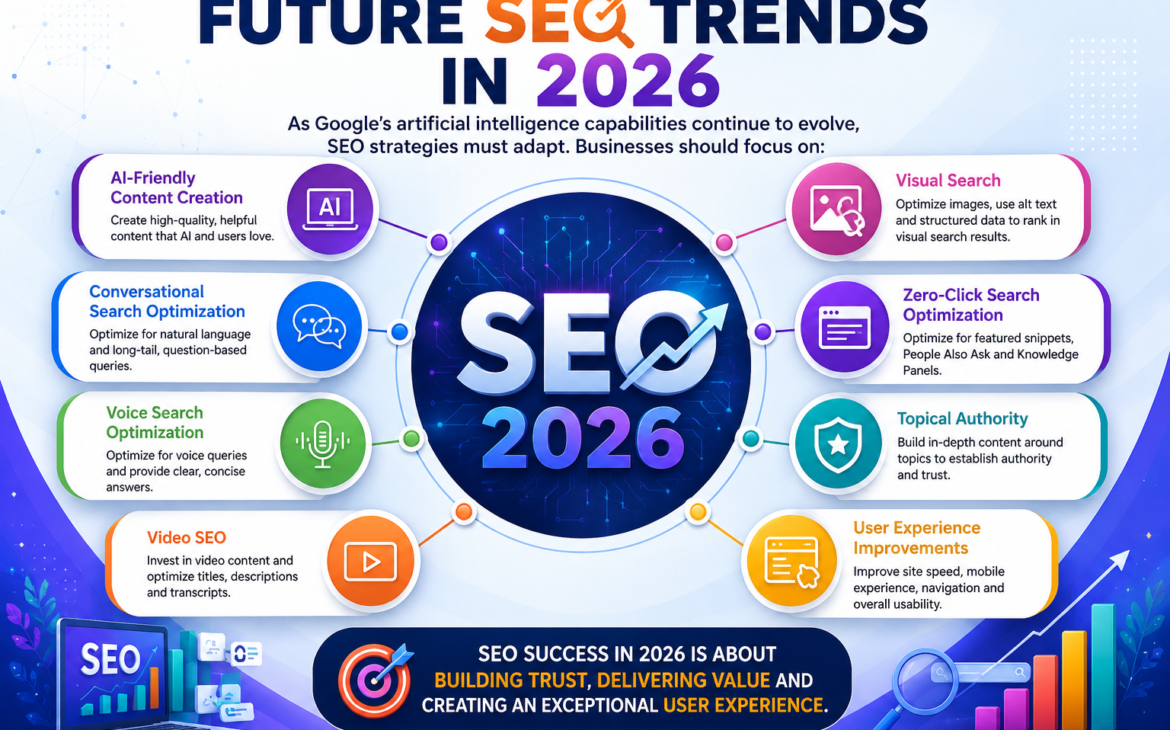
Future SEO Trends in 2026
As Google’s artificial intelligence capabilities continue to evolve, SEO strategies must adapt. Businesses should focus on:
friendly content creation
Conversational search optimization
Voice search optimization
Video SEO
Visual search
Zero-click search optimization
Topical authority
User experience improvements
SEO success in 2026 is about building trust, delivering value and creating an exceptional user experience.
Conclusion
Google’s ranking factors in 2026 go beyond just using the right keywords. Search engines now prioritise content, user experience, website performance, technical excellence and trustworthiness. Businesses that consistently publish content, optimise their websites for speed and mobile devices, build authoritative backlinks and align with user intent are more likely to achieve sustainable rankings.
SEO should be viewed as a long-term strategy rather than a one-time task. By focusing on quality, expertise, technical optimisation, and continuous improvement, you can strengthen your presence, attract more organic traffic and stay ahead of Google’s evolving algorithms. The websites that put users first will continue to earn visibility in search results.
Frequently Asked Questions
1. What is the important Google ranking factor in 2026?
The important ranking factor is helpful user-focused content combined with strong EEAT, excellent page experience and technical SEO.
2. Are backlinks still important for SEO in 2026?
Yes, quality relevant backlinks continue to be a major ranking signal, while low-quality or spammy links can negatively impact rankings.
3. Does AI-generated content rank on Google?
AI-generated content can rank if it is accurate, original, valuable and reviewed or enhanced by expertise. Google prioritises content quality over how it’s created.
4. How does mobile optimisation affect Google rankings?
Google uses mobile indexing, meaning the mobile version of your site is the primary version evaluated for rankings. Fast, responsive and user-friendly mobile pages are essential.
5. How often should I update my website content?
You should. Update important pages every 3-6 months or sooner if there are significant industry changes, new statistics or updates to Google’s search guidelines.
Thank you for reading
Buy Web Hosting at an affordable price: Buy Now.
If you want to build your website at an affordable price, contact www.nextrtechnology.com
Read more blogs: https://www.nextrtechnology.com/blog/