What Is Technical SEO? A Complete Beginner’s Guide
In the world we live in today, having a website is just the first step. Businesses need to make sure that their websites are easy for people to find and that search engines like Google can understand them. This is where Technical SEO comes in.
Technical SEO is the foundation of an SEO strategy. It is about making sure the technical parts of a website are working well so search engines can find and rank the website easily.
Whether you have a business website, a store, a blog or some other kind of online platform, understanding Technical SEO can help you get better search rankings, make your website more user-friendly and get more people visiting your site.
This guide is for people who’re new to Technical SEO. It explains what Technical SEO is, why it is important and how to do it.
What Is Technical SEO?
Technical SEO is the process of making sure the technical parts of a website are working well. Search engines can find and rank it easily.
Unlike SEO, which is about using the right words, creating good content and getting other websites to link to yours, Technical SEO is about the behind-the-scenes parts of a website.
The main goal of SEO is to make a website that is easy for search engines to understand, fast for users to access, secure and works well on mobile devices.
A website that is technically sound provides an experience for both search engines and the people who visit the site.
Why Is Technical SEO Important?
Search engines are getting smarter all the time. Google’s algorithms now look at how a website is performing, how user-friendly it is and how good the technical quality is when deciding how to rank it.
Here are some reasons why Technical SEO is important:
1. It helps search engines find your website.
Search engines use programs called bots to find and look at websites. If your website is not technically sound, these bots may have trouble accessing parts of your site.
Technical SEO helps search engines find and rank your website by making sure they can crawl and index it easily.
2. It makes your website faster.
How fast a website loads is one of the important things that affects its ranking. People expect websites to load quickly, and if they do not, they may leave the site.
Technical SEO can make your website faster by optimising images using caching techniques and getting rid of unnecessary code.
3. It makes your website work better on devices.
Most people access websites using their smartphones. Google looks at the version of a website first when deciding how to rank it.
Technical SEO makes sure your website is responsive, works well on devices and loads quickly.
Important Elements of Technical SEO
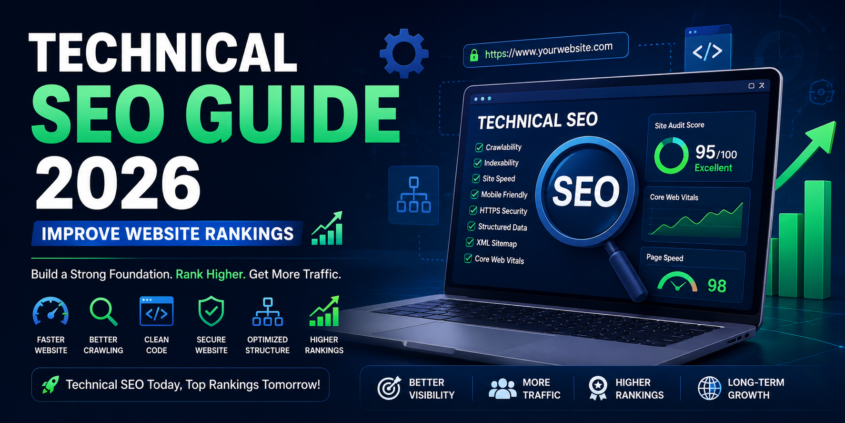
1. Website Crawling and Indexing
Crawling and indexing are parts of how search engines find websites.
Important Technical SEO factors include:
The robots.txt file, which tells search engines which parts of your website they can or cannot access.
The XML sitemap, which helps search engines understand the structure of your website. Find important parts.
2. Website Speed Optimisation
How fast a website loads directly affects its ranking and how user-friendly it is.
Important speed optimisation techniques include:
Compressing images using image formats, getting rid of unused plugins and optimising code.
3. Core Web Vitals Optimisation
Core Web Vitals are measurements that Google uses to evaluate the user experience of a website.
The main Core Web Vitals include:
How the main content of a website loads.
How responsive a website. How quickly it interacts with users.
How stable a website is when it is loading.
Improving Core Web Vitals can help your website rank better.
4. HTTPS and Website Security
Website security is a factor in how search engines rank a website.
Using an SSL certificate makes your website more secure. Changes its address from HTTP to HTTPS.
This provides benefits, including:
Secure user data, better customer trust, improved search rankings and protection against security threats.
5. Mobile-Friendly Optimisation
A mobile-friendly website adapts automatically to different screen sizes.
Technical SEO practices include:
Using responsive design, optimising images, making navigation simple and making sure the website loads quickly on mobile devices.
6. Fixing Broken Links and Errors
Broken links create an user experience and can affect how search engines rank a website.
Common technical errors include:
links, incorrect redirects and duplicate pages.
Regular website audits help. Fix these problems.
7. Structured Data and Schema Markup
Schema markup helps search engines understand the content of a website.
It can improve how a website appears in search results by adding features such as:
Reviews, FAQs, products, events and articles.
8. Canonical Tags and Duplicate Content Management
Duplicate content can confuse search engines. Affect how they rank a website.
Canonical tags tell search engines which version of a page’s the main one.
They help avoid content issues, improve indexing and consolidate ranking signals.
9. Website Architecture and Internal Linking
A clear website structure helps both users and search engines navigate a website.
Best practices include:
Creating categories using simple URLs, adding internal links and maintaining a proper page hierarchy.
Technical SEO Checklist for 2026
Use this checklist to improve your website:
✅ Install an SSL certificate to make your website more secure.
✅ Create an XML sitemap to help search engines understand your website.
✅ Optimise your robots.txt file to make sure search engines can access parts of your site.
✅ Improve your website’s loading speed to make it faster.
✅ Fix broken links to create a user experience.
✅ Optimise your Core Web Vitals to improve your website’s performance.
✅ Make your website mobile-friendly to improve its ranking.
✅ Use SEO- URLs to make it easier for search engines to understand your website.
✅ Add schema markup to improve how your website appears in search results.
✅ Remove content to avoid confusing search engines.
✅ Improve your linking to help search engines navigate your website.
✅ Perform SEO audits to identify and fix technical problems.
Common Technical SEO Mistakes to Avoid
Websites lose their ranking because of technical problems.
Avoid these mistakes:
1. Ignoring your website’s speed.
A slow website can reduce user engagement. Affect its ranking.
2. Not optimising for devices.
Mobile usability directly affects a website’s ranking.
3. Blocking parts of your website.
Incorrect robots.txt settings can prevent search engines from accessing parts of your site.
4. Duplicate content issues.
Duplicate pages can confuse search engines. Affect a website’s ranking.
5. Missing website audits.
Regular audits help identify problems early and prevent them from affecting your website’s ranking.
Best Tools for Technical SEO
Some tools can help you analyse and improve your website:
Google Search Console, Google PageSpeed Insights, Screaming Frog SEO Spider, SEMrush Site Audit, Ahrefs Webmaster Tools and GTmetrix.
These tools help identify crawling issues, speed problems and technical errors.
Future of Technical SEO in 2026
SEO will continue to evolve with advancements in artificial intelligence and search technology.
Future trends include:
Powered SEO audits, better user experience optimisation, voice search optimisation, automated website monitoring, advanced structured data and improved website performance standards.
Businesses that invest in SEO will have better opportunities to compete in search results.

FAQs About Technical SEO
1. What is Technical SEO in words?
Technical SEO is the process of improving a website’s structure so search engines can easily find, understand and rank it.
2. Is SEO important for ranking?
Yes, Technical SEO is important because it improves a website’s performance, indexing, speed, security and user experience, which all affect its ranking.
3. How often should I perform a Technical SEO audit?
You should perform a Technical SEO audit every month or whenever you make major changes to your website.
4. What are the main Technical SEO factors?
Major Technical SEO factors include website speed, mobile optimisation, HTTPS security, crawling, indexing, XML sitemap, schema markup and Core Web Vitals.
5. Can beginners learn Technical SEO?
Yes, beginners can learn SEO by understanding website structure, SEO tools, Google guidelines and basic optimisation techniques.
Conclusion
Technical SEO is the foundation of an SEO strategy. Without technical optimisation, even high-quality content may struggle to achieve better search rankings.
In 2026, businesses must focus on website speed, mobile performance, security, crawlability and user experience to stay competitive.
By implementing Technical SEO practices and regularly monitoring your website’s performance, you can improve your visibility, attract more organic traffic and create a better experience for your users.
A strong website creates a solid foundation for long-term SEO success.
Thank you for reading
Buy Web Hosting at an affordable price: Buy Now.
If you want to build your website at an affordable price, contact www.nextrtechnology.com
Read more blogs: https://www.nextrtechnology.com/blog/