How AI Is Changing Business Operations
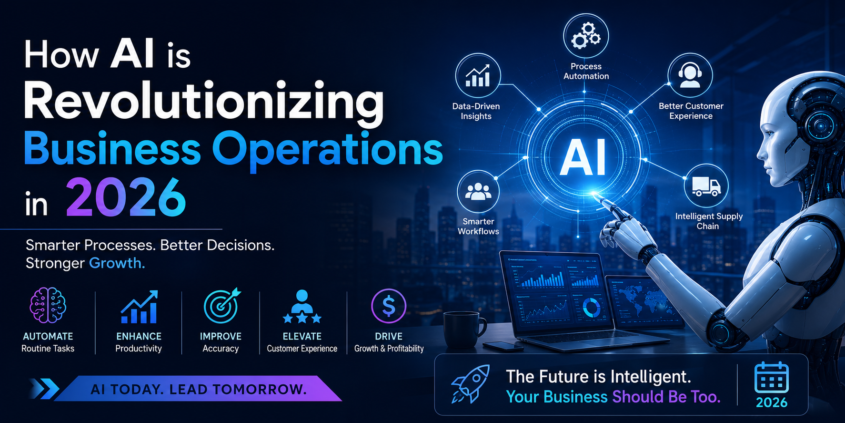
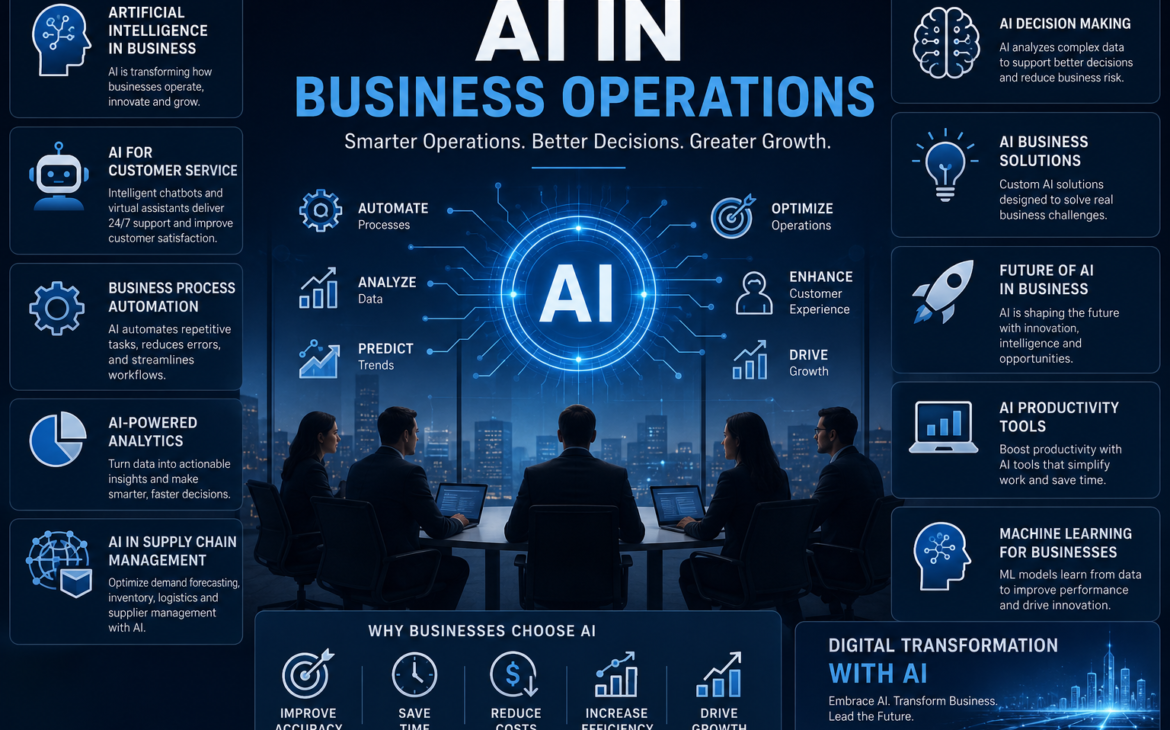
Artificial Intelligence (AI) has come a long way from being just an idea to a powerful tool that is changing businesses all over the world. AI is helping businesses in ways like automating tasks, making customers happier and helping make better decisions. This is happening quickly. All kinds of businesses are using AI to work efficiently, save money, be more productive and stay ahead.
As businesses keep changing with technology, AI has become very important for success. Whether it’s a business trying to use resources wisely or a big company managing complex tasks, AI offers new solutions that drive growth and efficiency.
Understanding AI in Business
AI refers to computer systems that can do tasks that usually need intelligence. These tasks include learning from data, finding patterns, making predictions, understanding language and solving problems.
In business, AI helps organisations automate tasks, analyse lots of data and improve overall performance. AI technologies like machine learning, natural language processing (NLP), robotic process automation (RPA) and predictive analytics are used across business functions.
Key Ways AI is Changing Business Operations
1. Automating Repetitive Tasks
One of the impacts of AI is automation. Many business processes involve tasks that take a lot of time and resources.
AI-powered automation can handle tasks such as:
Data entry
Invoice processing
Appointment scheduling
Payroll management
Inventory tracking
Email responses
By automating these tasks, businesses can reduce errors, improve accuracy and let employees focus on important activities.
2. Improving Customer Service
Customer expectations are rising, and businesses must provide personalised and efficient support.
AI-powered chatbots and virtual assistants are changing customer service by offering:
24/7 Customer support
Responses to inquiries
Personalized recommendations
Faster issue resolution
Reduced support costs
These systems can handle thousands of customer interactions at once, improving customer satisfaction and reducing workload for support teams.
3. Improving Data Analysis and Decision-Making
Businesses generate a lot of data every day. AI enables organisations to process and analyse this data more efficiently than traditional methods.
AI-powered analytics helps companies:
Identify market trends
Predict customer behavior
Forecast sales
Detect inefficiencies
Make data-driven decisions
Instead of relying on intuition, business leaders can use AI-generated insights to make informed strategic decisions that support growth and profitability.
4. Optimising Supply Chain Management
Supply chain operations are often complex and vulnerable to disruptions. AI helps businesses improve supply chain efficiency through analysis and real-time monitoring.
Benefits include:
Accurate demand forecasting
Inventory optimization
Route planning
Risk management
Supplier performance analysis
AI allows organisations to reduce delays, minimise waste and improve supply chain performance.
5. Streamlining Human Resource Management
Human Resources (HR) departments are increasingly adopting AI solutions to improve recruitment and workforce management.
AI applications in HR include:
Resume screening
Candidate matching
Employee performance analysis
Workforce planning
Employee engagement monitoring
These tools help organisations hire talent faster while improving employee retention and productivity.
AI and Business Productivity
Productivity is a reason businesses invest in AI technologies. AI systems work continuously without getting tired, enabling organisations to complete tasks more accurately.
Some productivity benefits include:
– workflows
– Reduced operational costs
– Improved resource allocation
– Increased employee efficiency
– Better project management
By eliminating manual bottlenecks, businesses can achieve higher output with fewer resources.
AI-Powered Personalisation
Modern customers expect experiences across every interaction. AI helps businesses analyse customer preferences, behaviours and purchasing patterns to deliver experiences.
Examples include:
– product recommendations
– Customised marketing campaigns
– Dynamic pricing strategies
– Targeted content delivery
This level of personalisation improves customer engagement, increases conversion rates and strengthens brand loyalty.
AI in Financial Operations
Management is another area where AI is creating substantial improvements.
AI helps finance teams with:
– Fraud detection
– Risk assessment
– Financial forecasting
– Expense management
– Automated bookkeeping
By identifying transactions and analysing financial data in real time, AI enhances security and supports better financial planning.
The Role of AI in Cybersecurity
As cyber threats become more sophisticated, businesses need security solutions.
AI strengthens cybersecurity by:
– Detecting activities
– Identifying vulnerabilities
– Monitoring network traffic
– Preventing cyberattacks
– Responding to threats automatically
AI-powered security systems can analyse vast amounts of data and recognise patterns that human analysts may miss.
Challenges of Implementing AI
Despite its advantages, AI adoption comes with challenges.
– **Data Quality Issues**: AI systems rely on relevant data. Poor-quality data can produce inaccurate results and reduce effectiveness.
– **Integration Complexity**: Integrating AI into existing business systems may require expertise and infrastructure upgrades.
– **Employee Resistance**: Some employees may fear automation or job displacement. Organisations must provide training. Emphasise how AI supports rather than replaces human workers.
– **Privacy and Security Concerns**: Businesses must ensure data usage and comply with privacy regulations when implementing AI solutions.
Future of AI in Business Operations
The future of AI in business operations looks promising. As AI technologies continue to evolve, businesses can expect greater automation, smarter decision-making and enhanced customer experiences.
Emerging trends include:
– Generative AI for content creation
– Business processes
– AI-powered predictive maintenance
– Hyper-personalised customer interactions
– Advanced business intelligence systems
Organisations that embrace AI today will be better positioned to adapt to future market changes and maintain a competitive edge.
Best Practices for AI Adoption
To maximise AI benefits, businesses should:
– Define business objectives
– Start with small AI projects
– Invest in quality data management
– Train employees on AI technologies
– Monitor performance continuously
– Ensure ethical and transparent AI usage
A strategic implementation approach can help organisations achieve long-term success with AI.
Conclusion
Artificial Intelligence is fundamentally changing the way businesses operate. From automating tasks and enhancing customer service to improving decision-making and strengthening cybersecurity, AI is driving efficiency and innovation across industries. Businesses that leverage AI effectively can reduce costs, increase productivity and deliver customer experiences.
As technology continues to advance, AI will play a greater role in shaping the future of business operations. Organisations that invest in AI today are positioning themselves for growth, operational excellence and long-term competitiveness in an increasingly digital world.
FAQs
1. What is AI in business operations?
AI in business operations refers to the use of intelligence technologies to automate processes, analyse data, improve decision-making and enhance operational efficiency.
2. How does AI improve business productivity?
AI automates tasks, reduces human errors, accelerates workflows and enables employees to focus on strategic activities, resulting in higher productivity.
3. Can small businesses benefit from AI?
Yes. Small businesses can use AI for customer service, marketing automation, inventory management and data analysis to improve efficiency and reduce costs.
4. What industries use AI the most?
Industries such as healthcare, finance, retail, manufacturing, logistics and technology are among the adopters of AI solutions.
5. Is AI replacing jobs?
AI primarily automates tasks, but it also creates new job opportunities that require human creativity, strategic thinking and technical expertise.
Thank you for reading
Buy Web Hosting at an affordable price: Buy Now.
If you want to build your website at an affordable price, contact www.nextrtechnology.com
Read more blogs: https://www.nextrtechnology.com/blog/