The global energy industry is moving into an era of technology. Electric vehicles are no longer a green way to travel. With Everything-to-Grid technology electric vehicles become storage units that can help homes, offices and the power grid. In 2027 Everything-to-Grid technology will be more important for managing energy adding power and building modern power systems.
Traditionally electric vehicles get power from charging stations and use the battery for driving.. New bidirectional charging lets power go both ways. This means EV batteries can store energy when it is cheap or plentiful and then give power back to homes, offices or the grid when needed. As intelligence, smart chargers and renewable energy grow Everything-to-Grid technology opens new chances for a linked and efficient future.
What Is Everything-to-Grid Technology. How Does It Work?
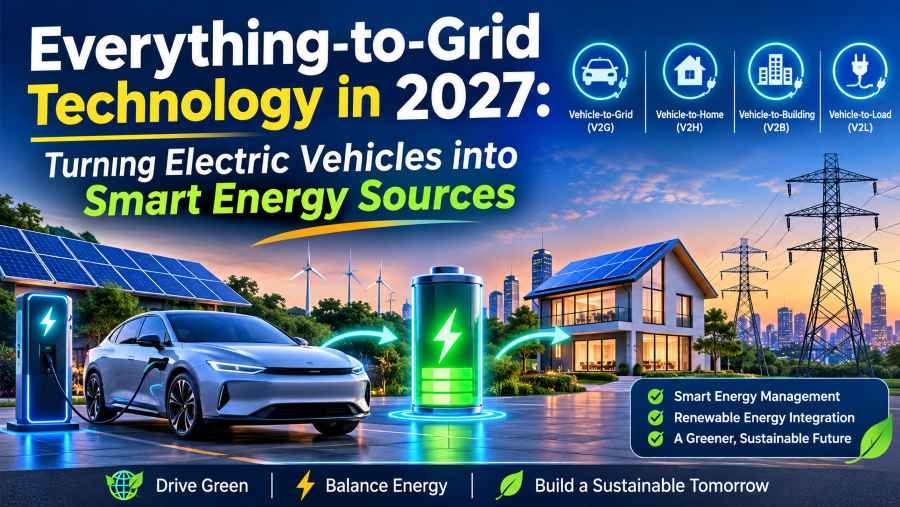
Everything-to-Grid technology is a way of managing energy that links electric vehicles with many energy systems using bidirectional power flow. It contains methods, like Vehicle-to-Grid Vehicle-to-Home Vehicle-to-Building and Vehicle-to-Load. Together these methods let electric vehicles act as energy sources instead of only using electricity.
The core of Everything-to-Grid technology is charging. Normal EV chargers move power from the grid to the car. Bidirectional chargers move power in both directions. When power is cheap or renewable output is high an electric vehicle can charge. When demand rises the stored power can be sent back to the grid. Used by buildings.
For example a family that owns an electric vehicle and a bidirectional charger can keep extra solar power during the day and then use the car’s battery to power the house in the evening. Likewise offices can use a fleet of vehicles as temporary storage during high‑use times.
Advanced battery managers, meters, power converters and energy software all work together to make this work well. They watch battery health, price of power charging needs and how much energy is used so they know when to store or give back power.
In 2027 adding intelligence to the smart grid will make these systems smarter. AI platforms can look at energy demand predict how power will be used and automatically set the times for charging and discharging. This makes the energy world more flexible. Helps EV owners, companies and grid operators.
Major Benefits of Everything-to-Grid Technology for Electric Vehicles and Smart Energy Systems
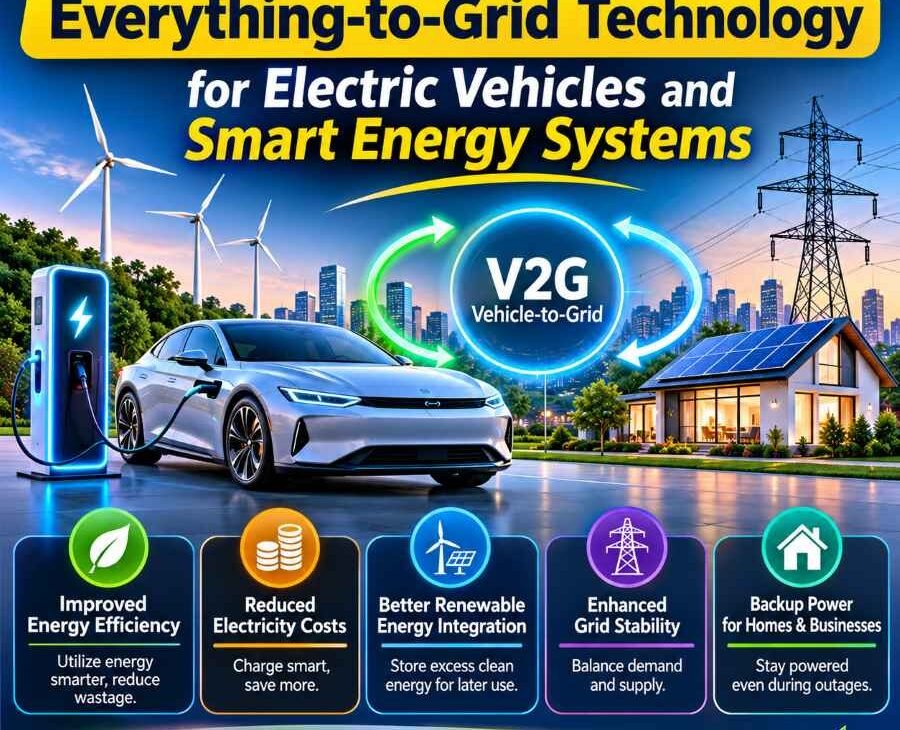
One of the benefits of Everything-to-Grid technology is that it turns electric vehicles into mobile storage units. Of letting a car’s battery sit idle when the vehicle is parked Everything-to-Grid lets the stored power be used elsewhere. This can raise energy efficiency. Help build smarter power networks.
Another key benefit is electricity bills. Smart chargers let EV owners charge when power is cheap during off‑peak hours. EV owners can also give back stored power when demand is high if local rates and grid programs allow it. Everything‑to‑Grid gives money savings while helping the power grid.
Renewable energy integration is another use. Solar and wind output can change with the weather. Electric vehicles with chargers can keep extra renewable power and then use it when the sun or wind slows down. Everything‑to‑Grid helps reduce energy wastage and makes power work better.
Everything‑to‑Grid technology can also make the grid steadier. When demand is high linked electric vehicles could give power back to the grid. With coordination these small power sources can help balance demand keep frequency stable and ease stress on old power plants.
For companies Everything‑to‑Grid gives chances to manage energy better. Offices, delivery firms and groups that run electric vehicles can use the car batteries to meet their power needs. Everything‑to‑Grid cuts reliance, on energy and gives more flexibility in operations.
Battery management is just as important in this change. Modern energy management systems can watch battery temperature charging levels and discharge cycles to reduce battery wear. Still manufacturers must make sure that vehicle warranties, battery safety and charging needs are fully covered before use.
The International Energy Agency says that Vehicle‑to‑Grid technology can give electricity system benefits, such as peak demand control and grid stabilisation. Wider use of Vehicle‑to‑Grid technology depends on vehicles, bidirectional chargers, communication standards and supportive regulations.
The Future of Everything‑to‑Grid Technology in 2027: AI, Smart Grids and Global Energy Innovation
The future of technology will rely on combining artificial intelligence the Internet of Things, advanced battery systems and smart electricity infrastructure. These tools will help build energy networks where electric vehicles, renewable energy systems, homes and commercial buildings talk to each other in real time.
Artificial intelligence will play a role in predicting electricity demand and fine‑tuning energy distribution. AI‑powered energy management platforms can analyse past consumption, electricity prices, weather forecasts and renewable energy output to find the charging schedules. This helps EV owners control electricity costs while letting energy providers balance supply and demand better.
The growth of charging infrastructure will also speed up adoption. Future charging stations will more support advanced communication among vehicles, chargers and electricity networks. International standards such as ISO 15118‑20 are crucial for enabling charging communication and improving interoperability between compatible systems.
Another key development is the rise of vehicle‑to‑building and vehicle‑to‑home applications. These solutions can give electricity during power outages and help households and businesses use renewable energy more effectively. Moreover electric vehicle fleets could become parts of virtual power plants, where many distributed energy resources are coordinated through centralised digital platforms.
Countries that invest in mobility and renewable energy infrastructure are testing vehicle‑to‑grid applications through pilot programmes and commercial projects. In India the growing use of vehicles the spread of solar power and the build‑up of smart electricity infrastructure create chances for future bidirectional charging solutions. Yet wide‑scale implementation will need EV models, affordable chargers, grid upgrades and clear regulatory frameworks.
For technology companies this shift offers chances in software development, IoT integration, cloud‑based energy monitoring, smart charging platforms and advanced data analytics. Businesses that invest in digital infrastructure can help build connected energy ecosystems.
As we head toward 2027 Everything‑to‑Grid technology marks a step toward making transportation and electricity infrastructure more connected, smart and sustainable.
Conclusion
Everything‑to‑Grid technology is changing the role of vehicles by turning them into smart energy resources that can support homes, commercial buildings and electricity networks. With charging AI‑powered energy management, smart grids and renewable energy integration EVs can help create more flexible and efficient electricity systems.
Even though challenges such as infrastructure costs, battery wear, interoperability and regulations still exist ongoing technological innovation opens possibilities for the energy industry. In 2027 and later Everything‑to‑Grid technology could become a part of the shift toward smarter transportation and sustainable energy solutions.
Frequently Asked Questions (FAQs)
Q1. What is technology?
Everything‑to‑Grid technology is a modern energy management idea that links electric vehicles with homes, buildings and electricity networks using bidirectional charging and smart energy systems.
Q2. How does Vehicle‑to‑Grid (V2G) technology work?
Vehicle‑to‑Grid technology lets compatible electric vehicles send stored battery electricity back to the power grid using bidirectional chargers.
Q3. What are the major benefits of technology?
The main benefits of technology are better energy efficiency, lower peak electricity demand, improved use of renewable energy possible electricity cost savings and more flexible grid operation.
Q4. Can electric vehicles power homes using technology?
Yes. Through Vehicle‑to‑Home technology compatible electric vehicles can give electricity to household systems during power outages, when the right charging equipment is in place.
Q5. What is the future of technology, in 2027?
The future will bring AI, IoT bidirectional charging, smart grids and renewable energy systems turning electric vehicles into key parts of smart energy infrastructure.
Thank you for reading
Buy Latest Tech Gadgets and Laptops: Click Here
Buy Web Hosting at an affordable price: Buy Now.
If you want to build your website at an affordable price, contact www.nextrtechnology.com
If you want to build your website at an affordable price, contact www.nextrtechnology.com
Read more blogs: https://nextrtechnology.com/blog/