The Impact of 5G Technology on Businesses
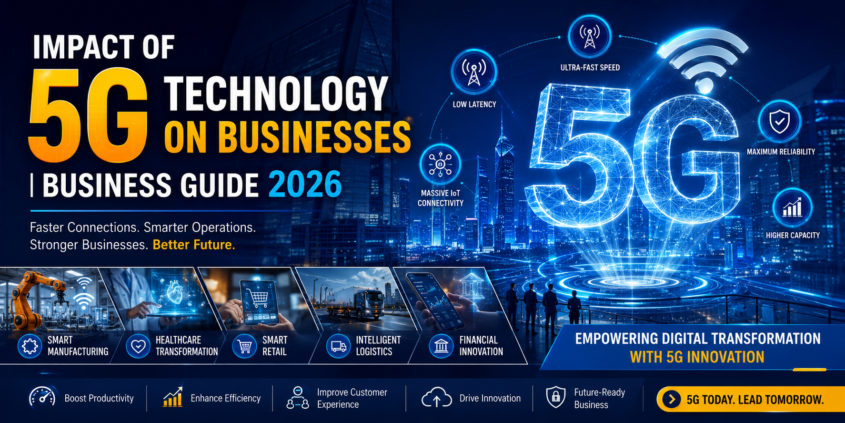
The way we do business is changing fast because of new digital technology. One of the changes is 5G technology. As companies start to use tools more and more, the impact of 5G technology on businesses is becoming very important. 5G technology gives us fast internet, very low latency, better connections and more room on the network. This helps companies work efficiently and come up with new ideas.
Many different kinds of businesses like manufacturing, healthcare, logistics, retail and finance are using 5G to improve how they work, make their customers happier and be more efficient.
In this blog, we will talk about how 5G technology’s changing businesses, its good points, how it is used, the problems it causes and what companies should expect in the future.
What is 5G Technology?
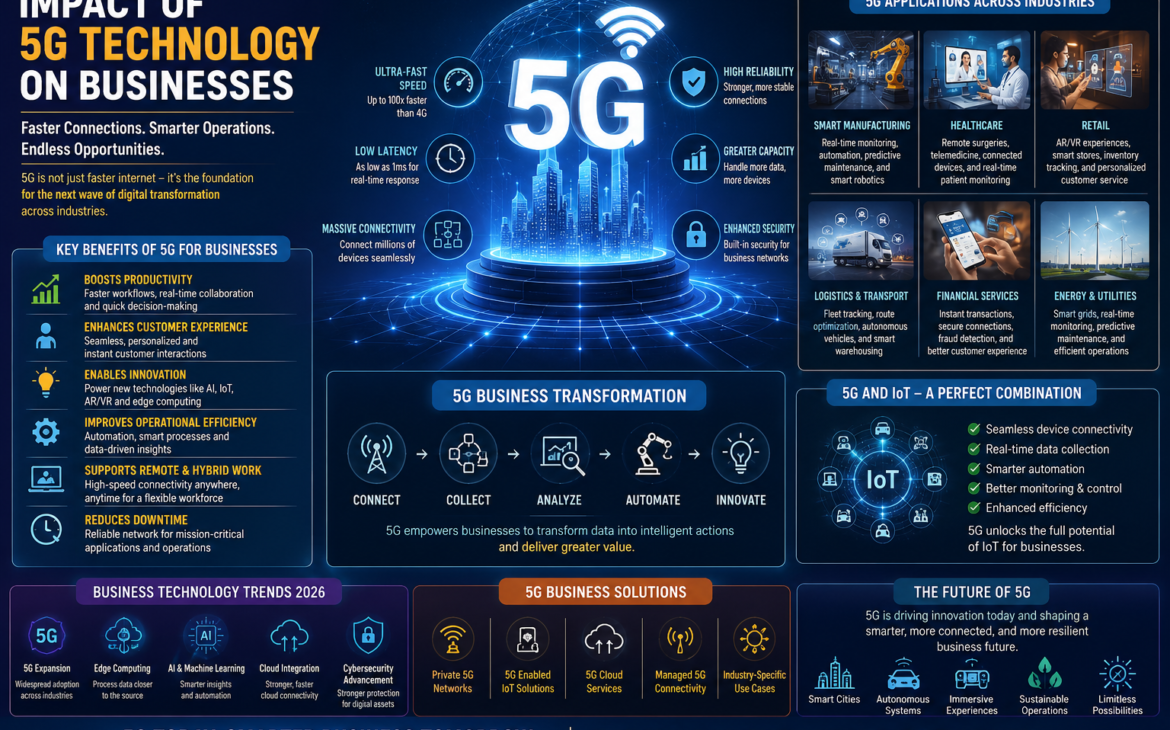
5G is the generation of wireless mobile networks. It is made to give us faster internet, lower latency and support for many connected devices at the same time.
Compared to 4G networks, 5G is better because it gives us:
* Download speeds that’re up to 100 times faster
* Low latency, as low as 1 millisecond
* Better network reliability
* Connections for devices
* Bandwidth
* Better security
These features make 5G a game-changing technology for businesses that want to use automation, artificial intelligence, cloud computing and smart technologies.
Why Businesses Need 5G
Today’s businesses rely a lot on tools, cloud platforms, remote teams and connected devices. Old networks often have problems with traffic and latency.
5G solves these problems by giving us:
* Faster communication
* Reliable cloud access
* Real-time collaboration
* video conferencing
* Instant data processing
* Better customer service
Companies can now build smarter operations while reducing downtime and making better decisions.
Major Benefits of 5G Technology for Businesses
1. Faster Data Transfer
One of the things about 5G is how fast it is.
5G technology helps businesses by letting them:
* Transfer big files instantly
* Stream high-definition content
* Upload cloud backups faster
* Improve collaboration
This helps employees work better and reduces waiting times.
2. Low Latency
Latency is the delay between sending and receiving data.
With low latency, businesses can support:
* Real-time automation
* Autonomous vehicles
* Industrial robots
* Online gaming
* Remote surgeries
* Financial trading
Even small delays matter in many industries.
3. Better Remote Work
Working from home and hybrid work models are very common now.
5G lets employees:
* Access cloud software quickly
* Join high-definition video meetings
* Share files instantly
* Use desktops
* Collaborate without interruptions
This leads to better productivity no matter where you are.
4. Enhanced Customer Experience
Customers want service away.
Businesses can improve customer experiences by:
* Making applications faster
* Personalising shopping
* Showing products
* Using reality
* Providing customer support powered by artificial intelligence
Retailers especially benefit from digital experiences.
5. Improved IoT Connectivity
The Internet of Things needs connections.
5G supports connected devices, including:
* Smart sensors
* Security systems
* Industrial machines
* Smart vehicles
* Medical devices
This lets businesses automate operations and get real-time data.
Industry Applications of 5G
Manufacturing
Smart factories use 5G for:
* Automated robots
* Predictive maintenance
* Machine monitoring
* Quality control
* Digital twins
Manufacturers have production delays and are more efficient.
Healthcare
Healthcare providers use 5G for:
* Telemedicine
* Remote patient monitoring
* medical devices
* Diagnostics powered by artificial intelligence
* Robotic surgeries
This improves patient care and reduces healthcare costs.
Retail
Retail businesses use 5G to:
* Enable stores without cashiers
* Improve inventory tracking
* Offer augmented reality shopping experiences
* Personalise promotions
* Optimise supply chains
Customers enjoy smarter shopping experiences.
Logistics and Transportation
Logistics companies benefit from:
* GPS tracking
* Fleet management
* Smart warehouses
* Route optimization
* Autonomous delivery vehicles
This reduces fuel costs. Improves delivery times.
Banking and Finance
Financial institutions use 5G for:
* Faster transactions
* Fraud detection
* Customer service powered by intelligence
* Mobile banking
* Secure payments
Better connections make both security and customer satisfaction better.
5G and Artificial Intelligence
Artificial intelligence works better with networks.
5G enables intelligence by giving us:
* Real-time analytics
* Instant data collection
* Faster machine learning
* Edge computing
* automation
Businesses can make decisions faster based on real-time information.
5G and Cloud Computing
Cloud computing is more powerful with 5G.
The benefits include:
* Faster cloud access
* latency
* Better backup solutions
* software performance
* Better collaboration
Companies can run cloud-based applications without performance problems.
Challenges of Implementing 5G
With its advantages, businesses face several challenges.
* Infrastructure Costs: Setting up 5G infrastructure costs a lot in hardware, software and networking equipment.
* Cybersecurity Risks: As more devices connect to networks, cybersecurity becomes more important.
* Limited Coverage: 5G coverage is still not available in some remote areas.
* Device Compatibility: Old devices may not support 5G, so companies need to upgrade their hardware.
Future of 5G in Business
The future of business is closely connected to 5G technology.
Over the few years we can expect:
* Smarter cities
* transportation
* Manufacturing driven by artificial intelligence
* Advanced robotics
* Immersive virtual reality
* Connected healthcare systems
* Intelligent agriculture
* automated warehouses
Companies that invest in 5G early will likely gain a competitive advantage through faster innovation and better operational efficiency.
Best Practices for Businesses Adopting 5G
To get the most out of 5G, companies should:
* Evaluate their business needs before implementing 5G.
* Upgrade their hardware and software to be compatible.
* Strengthen their cybersecurity measures.
* Train their employees.
* Integrate 5G with cloud and artificial intelligence technologies.
* Monitor their network performance regularly.
* Develop a plan to roll out 5G in phases to minimise disruption.
A planned strategy helps businesses succeed in the long term.
Conclusion
The impact of 5G technology on businesses is changing industries by enabling communication, smarter automation, better customer experiences and improved operational efficiency. Whether it is manufacturing, healthcare, retail, logistics, or finance, 5G is driving innovation. Helping companies stay competitive in a digital world.
Although implementing 5G requires investment and planning its long-term benefits are much bigger than the challenges. Companies that adopt 5G now will be better positioned to use emerging technologies like intelligence, IoT, edge computing and smart automation, ensuring growth in the years ahead.
Frequently Asked Questions (FAQs)
1. What is the impact of 5G technology on businesses?
5G technology improves business operations by giving us internet, low latency, better connections and support for many devices, leading to more productivity and innovation.
2. Which industries benefit the most from 5G technology?
Many industries benefit from 5G, including manufacturing, healthcare, retail, logistics, transportation, agriculture, finance and smart city initiatives.
3. How does 5G improve customer experience?
5G enables mobile applications, smooth video streaming, personalised services, augmented reality experiences and real-time customer support, resulting in higher customer satisfaction.
4. What are the challenges of adopting 5G for businesses?
Common challenges include infrastructure costs, cybersecurity risks, limited network coverage and the need to upgrade existing devices and systems.
5. Why is 5G important for the future of transformation?
5G provides the fast and reliable connections needed to power advanced technologies, like artificial intelligence, IoT, cloud computing, edge computing and automation, making it a key driver of digital transformation.
Thank you for reading
Buy Web Hosting at an affordable price: Buy Now.
If you want to build your website at an affordable price, contact www.nextrtechnology.com
Read more blogs: https://www.nextrtechnology.com/blog/