
Website Speed Optimisation in 2026: Complete Guide to Boost Performance
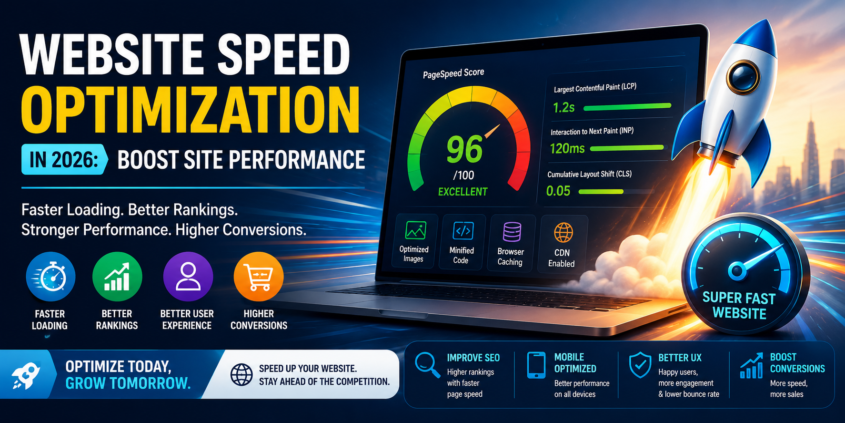
Website Speed Optimisation is super important. It is one of the important things for SEO, user experience and online business success. In 2026, users expect websites to load fast, and search engines reward fast-loading websites with visibility in search results.
A slow website can increase bounce rates, reduce conversions and negatively impact customer trust. Whether you run a business website, eCommerce store, portfolio or blog, optimising website speed should be a priority.
This guide explains everything you need to know about Website Speed Optimisation, including why it matters, common causes of website performance issues, practical optimisation techniques and the best tools to improve your website’s performance.
What is Website Speed Optimisation?
Website Speed Optimization is the process of improving how quickly a website loads. Becomes interactive for users. It involves optimising images, reducing code, improving server performance, enabling browser caching using Content Delivery Networks (CDNs) and following technical SEO best practices.
The goal is to provide users with a smooth browsing experience while improving search engine rankings.
Why Website Speed Matters in 2026
Google prioritises user experience through Core Web Vitals and other performance signals. A faster website offers benefits:
* Higher Google search rankings
* Better Core Web Vitals scores
* user experience
* Lower bounce rate
* Higher conversion rates
* Increased customer satisfaction
* Better mobile performance
* website security and stability
Studies show that even a one-second delay in page loading can significantly reduce conversions and user engagement.
Common Reasons Why Websites Become
Many websites suffer from performance issues because of avoidable mistakes.
* Large Image Files: Uploading high-resolution images without compression increases page size and slows loading speed.
* Poor Hosting: quality shared hosting often struggles to handle traffic spikes and resource-intensive websites.
* Many Plugins: Especially in WordPress, installing unnecessary plugins can increase loading time and create conflicts.
* Unoptimized Code: CSS files, JavaScript, HTML and unused code increase page rendering time.
* No Browser Caching: Without caching, browsers download the resources every time users visit your website.
* Excessive Redirects: Multiple redirects increase server response time and delay page loading.
* No CDN: Visitors located far from your server experience slower loading times when a CDN is not used.
Top Website Speed Optimisation Techniques
1. Optimise Images
Images are often the files on a webpage. Best practices include:
* Compress images before uploading
* Use WebP or AVIF formats
* Enable loading
* Resize images properly
* Avoid banners
Optimised images can dramatically reduce page size without affecting quality.
2. Choose Fast Web Hosting
Your hosting provider directly impacts website performance. Look for hosting that offers:
* SSD or NVMe storage
* LiteSpeed or NGINX servers
* uptime
* Built-in caching
* Free CDN
* HTTP/3 support
Investing in quality hosting is one of the best long-term performance improvements.
3. Enable Browser Caching
Browser caching stores website resources on visitors’ devices. Benefits include:
* Faster repeat visits
* Reduced server requests
* bandwidth usage
* Better user experience
4. Minify CSS, JavaScript and HTML
Minification removes spaces, comments and characters from code. This reduces file sizes. Improves loading speed. Many optimisation plugins automatically perform code minification.
5. Use a Content Delivery Network (CDN)
A CDN stores website content across global servers. Benefits include:
* International loading
* Reduced server load
* Uptime
* Improved website security
* Protection against traffic spikes
Popular CDN providers include Cloudflare, Bunny CDN and Amazon CloudFront.
6. Enable GZIP or Brotli Compression
Compression significantly reduces website file sizes before they are sent to visitors. Advantages include:
* Faster downloads
* bandwidth consumption
* Improved PageSpeed scores
Brotli generally provides better compression than GZIP.
7. Reduce HTTP Requests
Every webpage loads files. Reducing requests improves performance by:
* Combining CSS files
* Combining JavaScript files
* Removing fonts
* Limiting third-party scripts
8. Remove Plugins
For WordPress websites:
* Delete inactive plugins
* Remove themes
* Update active plugins regularly
* Replace heavy plugins with lightweight alternatives
Fewer plugins often result in better performance.
9. Optimise Database
Over time, website databases collect data. Regular maintenance includes:
* Removing spam comments
* Deleting post revisions
* Cleaning files
* Optimising database tables
Database optimisation improves server response time.
10. Improve Core Web Vitals
Core Web Vitals remain ranking signals in 2026. Focus on improving:
* Largest Paint (LCP)
* Interaction to Next Paint (INP)
* Cumulative Layout Shift (CLS)
Improving these metrics enhances both SEO and user experience.
Best Tools for Website Speed Optimisation
Tools help identify performance issues:
* Google PageSpeed Insights
* GTmetrix
* Pingdom Website Speed Test
* Lighthouse
* WebPageTest
* Chrome DevTools
* Google Search Console (Core Web Vitals Report)
These tools provide reports and actionable recommendations.
Website Speed Optimisation for Mobile
More than half of internet users browse on devices. To improve speed:
* Use responsive design
* Compress images
* Reduce popups
* Minimise JavaScript
* Enable caching
* Avoid autoplay videos
* Optimize fonts
Mobile optimisation directly affects user engagement and search rankings.
Website Speed and SEO
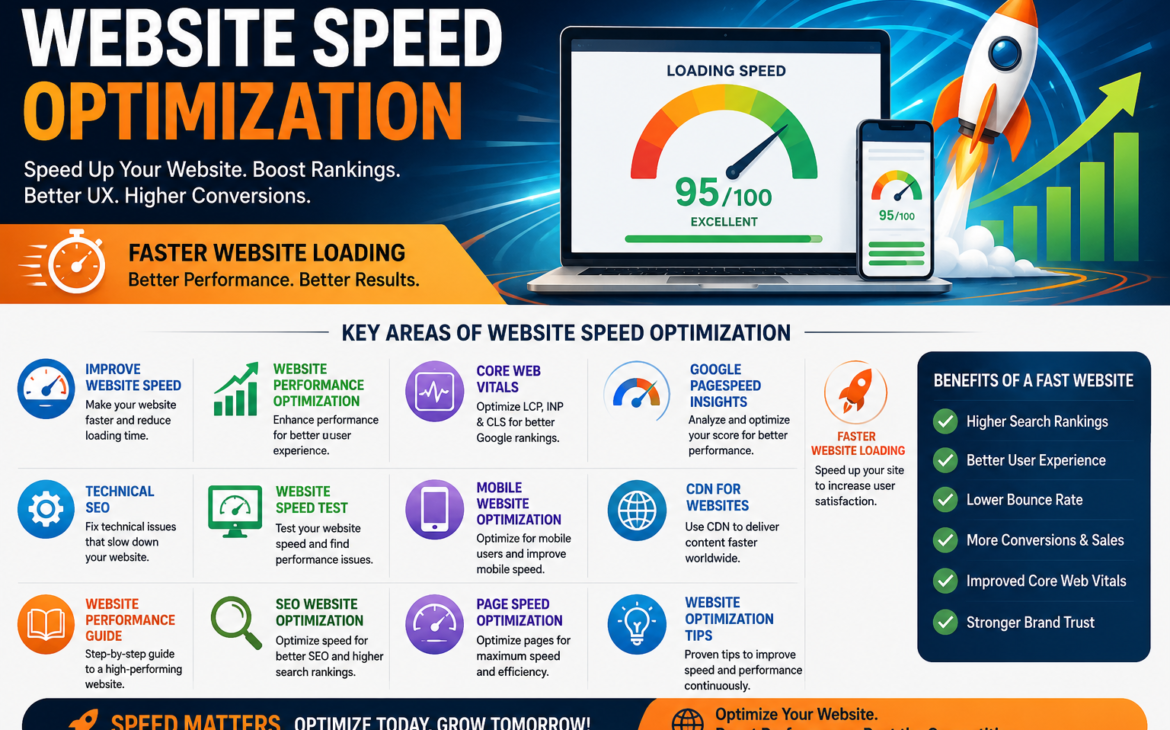
Website speed impacts SEO factors. A faster website helps search engines crawl pages efficiently, improves user engagement, lowers bounce rates and increases the chances of rankings.
Fast-loading websites also create a browsing experience encouraging visitors to spend more time exploring content.
Future Trends in Website Speed Optimisation
Website optimisation continues to evolve with technologies. Key trends for 2026 include:
* powered performance optimisation
* Edge computing
* HTTP/3 adoption
* Advanced caching systems
* Server-side rendering
* Modern image formats like AVIF
* Faster JavaScript frameworks
* Green hosting solutions
Businesses adopting these technologies will gain an advantage.
Final Website Speed Optimisation Checklist
Before launching or updating your website, ensure you:
* Compress all images
* Enable browser caching
* Minify CSS, HTML and JavaScript
* Use a CDN
* Optimise Core Web Vitals
* Choose hosting
* Remove unused plugins
* Enable GZIP or Brotli compression
* Optimise your database
* Test website speed regularly
Conclusion
Website Speed Optimization is one of the most valuable investments for any website in 2026. A fast-loading website improves SEO rankings, user satisfaction, conversions and overall business growth. By optimising images, selecting quality hosting, minimising code, using caching, and monitoring Core Web Vitals, you can deliver an experience for visitors across all devices.
Website performance is not a one-time task—it requires monitoring and regular improvements. Businesses that prioritise speed today will enjoy search visibility, better customer engagement and higher revenue in the future.
Frequently Asked Questions (FAQs)
1. What is the ideal website loading speed in 2026?
A website should ideally load within 2 to 3 seconds with Core Web Vitals meeting Google’s recommended thresholds.
2. Does website speed affect Google rankings?
Yes. Website speed and Core Web Vitals are ranking signals that influence search visibility and user experience.
3. Which tool is best for checking website speed?
Google PageSpeed Insights is one of the trusted tools along with GTmetrix and Lighthouse.
4. How often should I optimise my website speed?
You should monitor performance monthly. Optimise whenever you add new content, plugins or website features.
5. Can a CDN improve website speed?
Yes. A CDN delivers website content from servers closer to users, reducing loading times and improving performance.
Thank you for reading
Buy Web Hosting at an affordable price: Buy Now.
If you want to build your website at an affordable price, contact www.nextrtechnology.com
Read more blogs: https://www.nextrtechnology.com/blog/