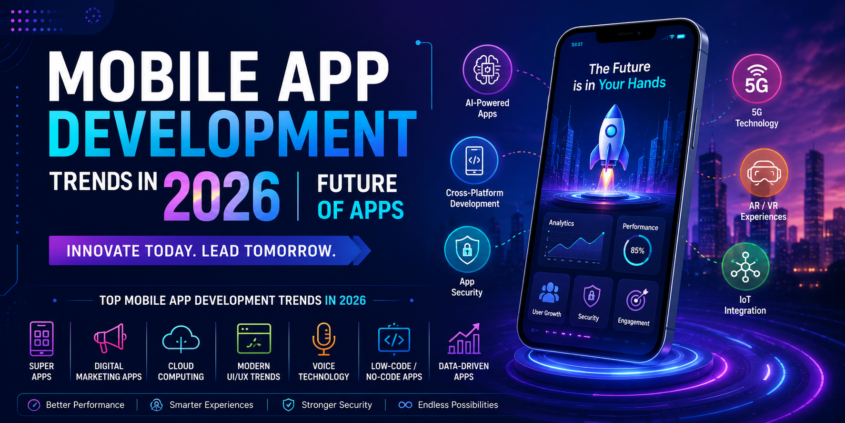
Mobile App Development Trends in 2026
The mobile app industry is changing fast. New technologies are helping businesses connect with users in ways. With billions of smartphone users worldwide, mobile apps have become essential for communication, shopping, banking, healthcare, education and entertainment. In 2026, app development will focus on automation, immersive experiences, better security and seamless cross-platform functionality.
Businesses are not just creating apps to exist. They are building feature-user-centric applications that offer personalised experiences. These apps use technologies like artificial intelligence (AI), 5G, cloud computing and the Internet of Things (IoT). Understanding the mobile app development trends can help businesses, developers and entrepreneurs stay competitive.
Why Mobile App Development Continues to Grow
People want convenience, speed and personalised services. Mobile apps have become a part of life, from food delivery and online shopping to digital payments and remote healthcare.
Businesses benefit from apps in many ways:
* Improving customer engagement
* Increasing brand visibility
* Streamlining operations
* Boosting customer loyalty
* Generating revenue
* Delivering personalised experiences
As technology advances, mobile applications are becoming smarter, faster and more secure.
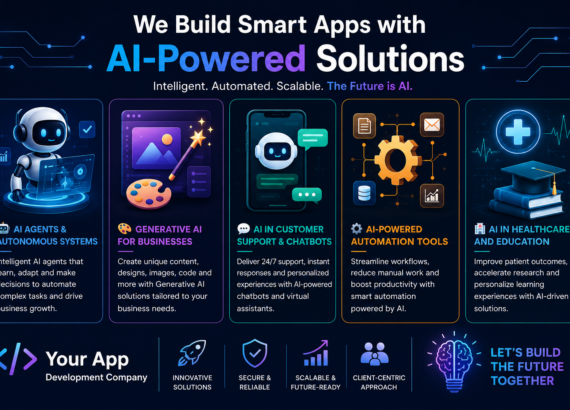
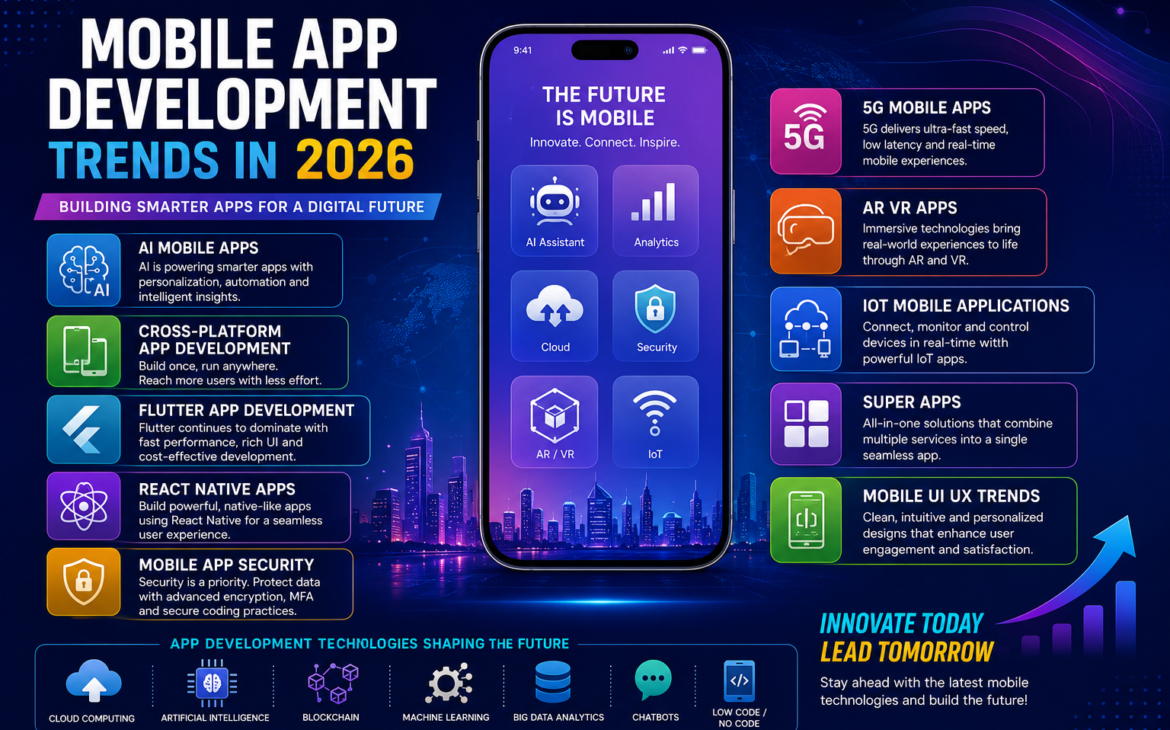
1. Artificial Intelligence (AI)-Powered Applications
Artificial Intelligence is making mobile applications more intelligent and responsive.
AI-powered features include:
* Personalised recommendations
* chatbots
* Voice assistants
* Predictive search
* Image recognition
* Fraud detection
* Automated customer support
AI enables apps to understand user behaviour, making interactions more intuitive and engaging.
2. Cross-Platform App Development
Businesses prefer platform development because it reduces costs and shortens development time.
Popular frameworks include:
* Flutter
* React Native
*.NET MAUI
These technologies allow developers to create applications that work seamlessly on both Android and iOS using a single codebase.
3. 5G-Powered Mobile Experiences
The global expansion of 5G networks is significantly improving app performance.
Benefits include:
* Faster downloads
* Reduced latency
* video streaming
* Enhanced multiplayer gaming
* Improved real-time communication
* Smoother cloud-based applications
4. Super Apps
Super apps combine services into a single platform, offering users greater convenience.
A super app may include:
* Messaging
* Digital payments
* Shopping
* Food delivery
* Travel booking
* Entertainment
* Banking
5. Augmented Reality (AR) and Virtual Reality (VR)
Immersive technologies continue gaining popularity across industries.
AR and VR applications are transforming:
* shopping
* Interior design
* Education
* Healthcare
* Gaming
* estate
* Tourism
6. Internet of Things (IoT) Integration
Smart devices are becoming increasingly connected through IoT.
Mobile applications now control:
* Smart homes
* devices
* Healthcare equipment
* Industrial machines
* Smart vehicles
* Security systems
7. Enhanced Mobile App Security
As cyber threats become more sophisticated, security remains a priority for developers.
Modern security practices include:
* Multi-factor authentication
* Biometric login
* End-to-end encryption
* Secure cloud storage
* Data privacy compliance
* AI-powered fraud detection
8. Cloud-Native Mobile Applications
Cloud technology is making mobile apps more scalable and efficient.
Cloud-native applications offer:
* backups
* Real-time synchronisation
* Lower storage requirements
* Faster updates
* collaboration
* Better scalability
9. Low-Code and No-Code Development
Low-code and no-code platforms are simplifying app development by enabling application creation with minimal coding.
Advantages include:
* Faster development cycles
* Reduced costs
* maintenance
* Rapid prototyping
* Greater accessibility for non-technical users
10. Personalised User Experiences
Personalisation has become an advantage in mobile applications.
Apps increasingly tailor content based on:
* User preferences
* Location
* Purchase history
* Browsing behavior
* Device usage
* Interests
11. Voice Search and Voice Interfaces
Voice technology is becoming a feature in modern mobile apps.
Users can:
* Search hands-
* Control smart devices
* Make purchases
* Schedule appointments
* Navigate applications
12. Modern UI/UX Design
User experience remains one of the critical factors in app success.
Popular design trends in 2026 include:
* Minimalist interfaces
* Dark mode support
* animations
* Micro-interactions
* Gesture-based navigation
* Personalised dashboards
* Accessible design
Industries Benefiting from These Trends
Many sectors are embracing advanced mobile app technologies, including:
* Healthcare
* Finance
* E-commerce
* Education
* Logistics
* Travel
* Real Estate
* Entertainment
* Manufacturing
* Hospitality
How Businesses Can Prepare for the Future
To stay ahead in the app market, businesses should:
* Invest in AI-powered features
* Prioritise user privacy and security
* Adopt cross-platform development frameworks
* Optimise apps for 5G connectivity
* Integrate cloud-based infrastructure
* Design intuitive and accessible user interfaces
* Continuously monitor user feedback and analytics
* Update applications with new features
Conclusion
The future of mobile app development in 2026 is driven by innovation, connectivity and user-centric design. Technologies like Artificial Intelligence, 5G, cloud computing, augmented reality, IoT and cross-platform development are transforming how mobile applications are built and experienced.
Frequently Asked Questions (FAQs)
1. What are the biggest mobile app development trends in 2026?
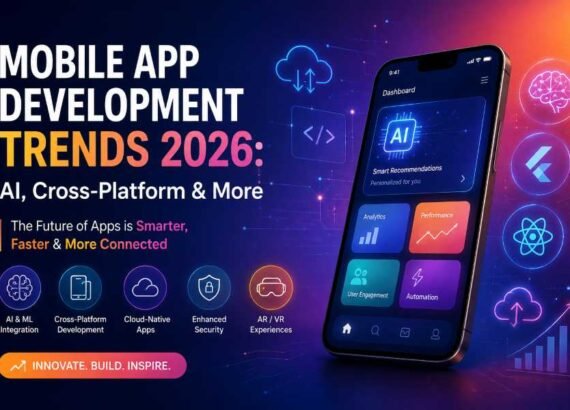
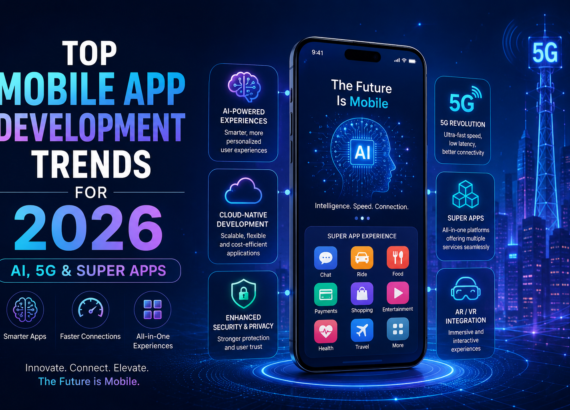
Key trends include AI-powered apps, 5G integration, cross-platform development, super apps, AR/VR experiences, IoT connectivity, cloud-native architecture and enhanced app security.
2. Why is cross-platform development becoming more popular?
Cross-platform frameworks like Flutter and React Native allow developers to build apps for Android and iOS using a single codebase, reducing development time and costs.
3. How is AI changing applications?
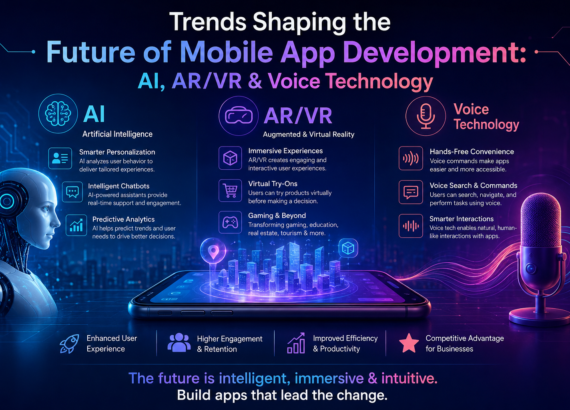
AI enhances apps through personalised recommendations, intelligent chatbots, predictive analytics, voice assistants, image recognition and automated customer support.
4. Why is mobile app security important in 2026?
As apps handle sensitive personal and financial data, strong security measures such as biometric authentication, encryption and multi-factor authentication are essential to protect users.
5. How can businesses stay competitive in mobile app development?
Businesses should adopt emerging technologies that focus on UI/UX design, prioritise security, optimise for 5G, leverage cloud services and continuously update apps based on user feedback and market trends.
Thank you for reading
Buy Web Hosting at an affordable price: Buy Now.
If you want to build your website at an affordable price, contact www.nextrtechnology.com
Read more blogs: https://www.nextrtechnology.com/blog/