Mobile App Development Trends 2026: What Businesses Need to Know Before Building Their Next App
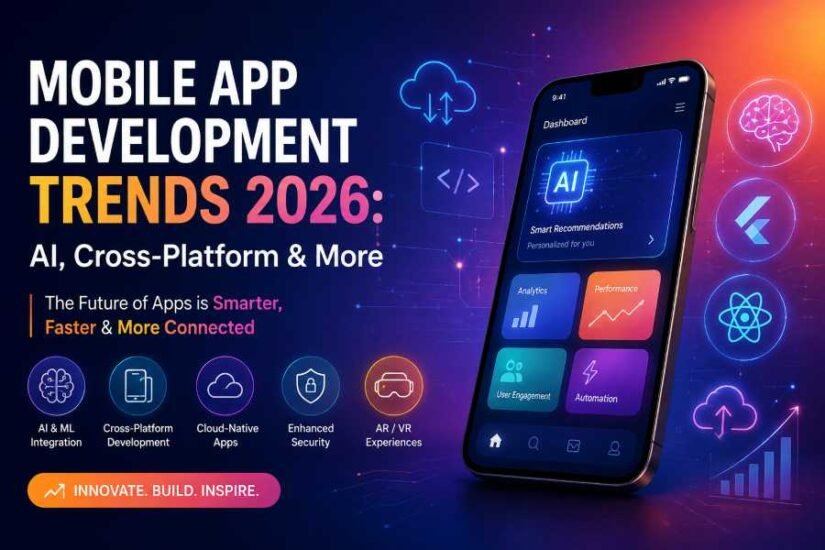
The global mobile app market has crossed roughly $206 billion in 2026 and is on track to reach over $616 billion by 2033, growing at a compound annual rate of nearly 17 percent. With more than 6.8 billion smartphone users worldwide, the pressure on businesses to build smarter, faster, and more personalised apps has never been higher. But here’s the catch: 90 percent of mobile apps are used just once and then abandoned. Standing out in 2026 isn’t about launching an app and hoping for the best — it’s about understanding which trends genuinely move the needle and which are just noise. Here’s a practical breakdown of the mobile app development trends actually shaping what gets built this year, and what they mean if you’re planning your next app.
AI-Native Apps: From Add-On Feature to Foundation
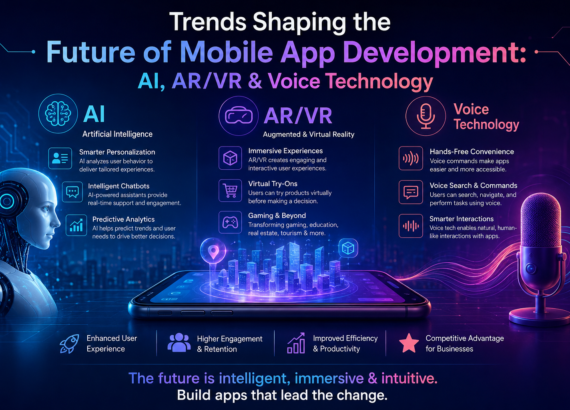
Artificial intelligence has moved from a bolt-on feature to the foundation of how modern apps are architected. Rather than adding a chatbot after the fact, AI-native apps embed machine learning into their core from day one, enabling real-time personalisation, predictive recommendations, and adaptive interfaces that respond to how each individual user actually behaves. On-device AI in particular is proving transformative, letting apps make smart decisions instantly, work offline, and protect user privacy since data doesn’t always need to leave the device. For businesses, the payoff is measurable: AI-driven personalisation has been shown to increase app engagement by 40 to 60 percent.
Agentic AI Is Also Changing How Apps Get Built
It’s not just what apps do — it’s how they’re built. AI coding assistants like GitHub Copilot Workspace and Cursor have evolved from simple autocomplete tools into agentic systems that can read an entire codebase, resolve bugs, and handle repetitive development tasks with far less manual oversight. Generative AI tools are now cutting development time by up to 50 percent in some cases. That said, this speed is a double-edged sword: the same AI tooling that compounds a disciplined development team’s output can just as easily accelerate technical debt for a team without solid engineering practices in place. The tools matter less than the pipeline and expertise behind them.
Cross-Platform Development Becomes the Default
Building separate native apps for Android and iOS is increasingly the exception rather than the rule for most businesses. Cross-platform frameworks like Flutter and React Native have matured to the point where they deliver near-native performance while cutting development time and cost significantly, since a single codebase can serve both platforms. Native development still has its place for apps that lean heavily on device-specific hardware, advanced graphics, or performance-critical features, but for the majority of business apps, cross-platform is now the practical starting point.
The Rise of Low-Code and No-Code Platforms
Low-code development is projected to account for as much as 75 percent of new application development by 2026, up sharply from around 40 percent just a few years ago, with the vast majority of enterprise developers already using these platforms in some capacity. This is genuinely useful for quickly validating an app idea or building simpler internal tools without a large upfront investment. The caveat worth understanding: low-code platforms are excellent for getting started, but businesses with complex logic, deep integrations, or serious scalability needs often benefit from an experienced development partner who can architect the app properly from the outset, rather than retrofitting structure onto a tool that’s outgrown its original purpose.
Super Apps and Mini-App Ecosystems
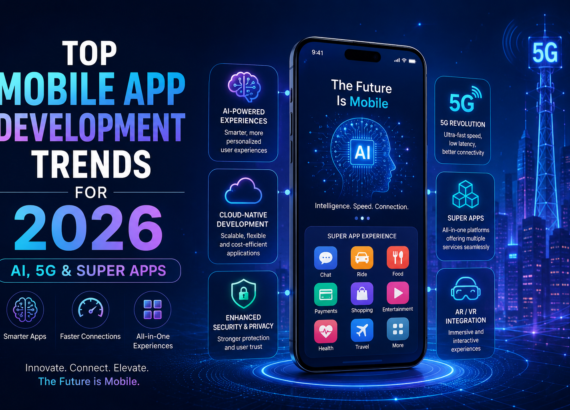
Large platforms are increasingly bundling multiple services — payments, messaging, bookings, shopping — into a single “super app” with smaller mini-apps running inside it, a model already common in fintech apps across India and Southeast Asia and now being adopted by major enterprise players. Most small and mid-sized businesses don’t need to build a full super app, but the underlying principle is worth borrowing: designing your app’s architecture with room to add new service layers later, rather than boxing yourself into a single rigid feature set.
Hyper-Personalization and Context-Aware UX
Generic, one-size-fits-all app experiences are increasingly falling flat with users. In 2026, leading apps use behavioural data to dynamically adjust home screens, notifications, and content feeds in real time, and increasingly predict user churn early enough to re-engage people through smart, timely notifications before they drop off entirely. A well-known example: shopping apps that surface relevant products and discounts based on real-time browsing behaviour, rather than generic bestseller lists.
Privacy-First Engineering Is No Longer Optional
As data protection regulations tighten across markets and users grow more conscious of how their information is used, privacy-first design has shifted from a competitive advantage to a baseline expectation. In practice, this means processing sensitive data on-device where possible, being transparent about what’s collected and why, and scoping privacy considerations into a project from the very first planning conversation rather than retrofitting compliance right before launch.
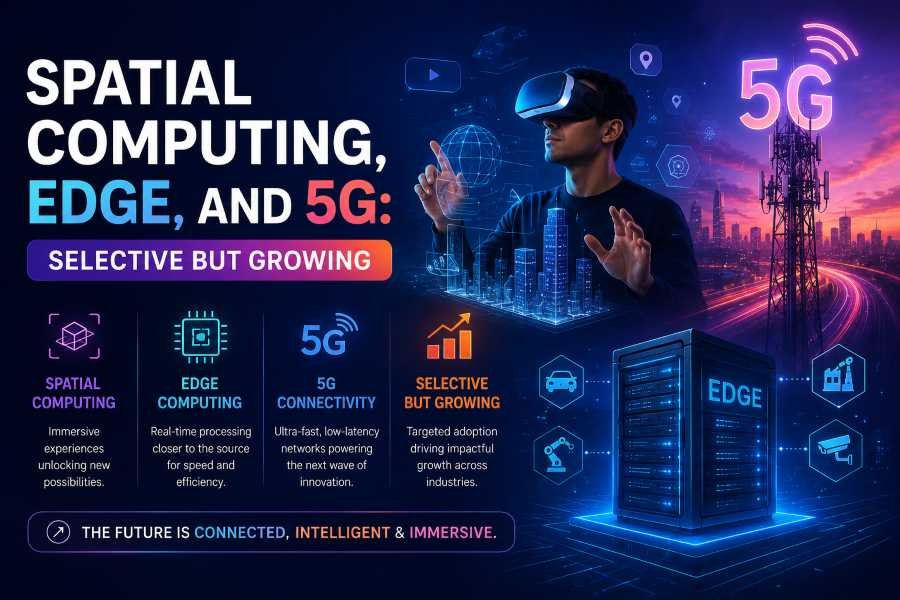
Spatial Computing, Edge, and 5G: Selective but Growing
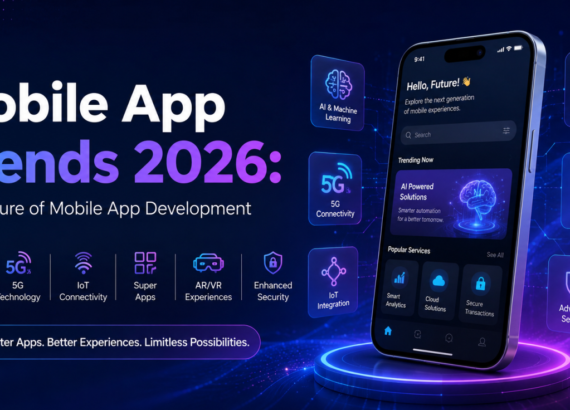
AR and VR features, once mostly experimental, are finding real-world business applications in 2026, from virtual product try-ons in retail apps to spatial training tools in enterprise settings. Alongside this, edge computing and expanding 5G coverage are enabling apps to process more data closer to the user, reducing latency for features that depend on real-time responsiveness. These trends aren’t relevant to every app, but for the right use case, they can be genuine differentiators rather than gimmicks.
Choosing the Right Development Partner
With so many frameworks, AI tools, and platform options now available, the biggest risk for most businesses in 2026 isn’t a lack of technology — it’s choosing the wrong combination of tools and skipping the strategic planning that ties them to actual business goals. A capable development partner does more than write code: they help decide which trends genuinely apply to your app, which platform architecture will scale with your business, and how to sequence features so an MVP can launch quickly without boxing you into costly rework later. Whether you’re building a customer-facing app, an internal tool, or a service layer inside a larger platform, that upfront strategic clarity tends to matter more for long-term success than any single trend on this list.
What This Means for Your Next App
- Don’t chase every trend — three areas deserve real budget for most businesses: AI tooling, cross-platform development, and privacy engineering.
- Build for retention from day one, since the vast majority of apps are used once and abandoned; personalisation and smart onboarding matter more than an extra feature.
- Use low-code tools to validate an idea quickly, but plan for an experienced development team once the app needs to scale or handle complex logic.
- Treat privacy and data handling as a design requirement from the first planning conversation, not an afterthought before launch.
- Pick a development partner who can translate these trends into a practical roadmap for your specific business, rather than a generic feature checklist.
Conclusion
Mobile app development in 2026 isn’t just about adding more features — it’s about building apps that think, adapt, and personalise from the ground up, using development processes that are faster and smarter than ever before. AI-native architecture, mature cross-platform frameworks, and privacy-first engineering have moved from nice-to-have to foundational, while trends like super apps and spatial computing remain selective bets worth exploring for the right use case. Businesses that focus on the fundamentals — genuine user value, retention-focused design, and the right technical partner — will be far better positioned than those chasing every headline trend. If you’re planning a mobile app for 2026, the smartest first step is a clear strategy built around what actually matters for your users, not just what’s trending.
Frequently Asked Questions (FAQs)
Q1. What is the biggest mobile app development trend in 2026?
AI-native design is the clearest trend this year. Rather than bolting AI features onto a finished app, developers are building apps with machine learning embedded into the core architecture from day one, enabling personalisation, prediction, and on-device intelligence that works even with limited or no internet connection.
Q2. Should I choose native or cross-platform development for my app in 2026?
Cross-platform frameworks like Flutter and React Native have matured enough to be the default choice for most business apps in 2026, offering faster development and lower cost while still delivering near-native performance. Native development still makes sense for apps with heavy graphics, hardware-specific features, or performance-critical use cases.
Q3. Is low-code or no-code development a good option for building a business app?
It depends on the complexity of your app. Low-code platforms are excellent for validating an idea quickly or building simpler internal tools, and adoption is growing fast. However, for apps with complex logic, integrations, or scalability needs, working with an experienced development team helps avoid the technical debt that can build up when non-technical teams outgrow a low-code platform.
Q4. What is a super app, and does my business need one?
A super app is a single mobile application that bundles multiple services — such as payments, messaging, shopping, and bookings — into one platform with mini-apps running inside it. Most small and mid-sized businesses don’t need a full super app, but understanding the mini-app ecosystem model can inform how you structure features for future growth.
Q5. How important is privacy in mobile app development now?
Very important. With data protection regulations tightening globally and users increasingly aware of how their data is used, privacy-first engineering — such as on-device processing, transparent data practices, and minimal data collection — has become a baseline expectation rather than an optional feature.
Q6. How long does it typically take to build a mobile app in 2026?
Timelines vary widely based on complexity, but AI-assisted development tools and mature cross-platform frameworks have shortened typical build times compared to a few years ago. A focused MVP can often be developed in a matter of weeks, while a full-featured app with custom backend integrations may still take several months.
Thank you for reading
Buy Latest Tech Gadgets and Laptops: Click Here
Buy Web Hosting at an affordable price: Buy Now.
If you want to build your website at an affordable price, contact www.nextrtechnology.com
If you want to build your website at an affordable price, contact www.nextrtechnology.com
Read more blogs: https://www.nextrtechnology.com/blog/