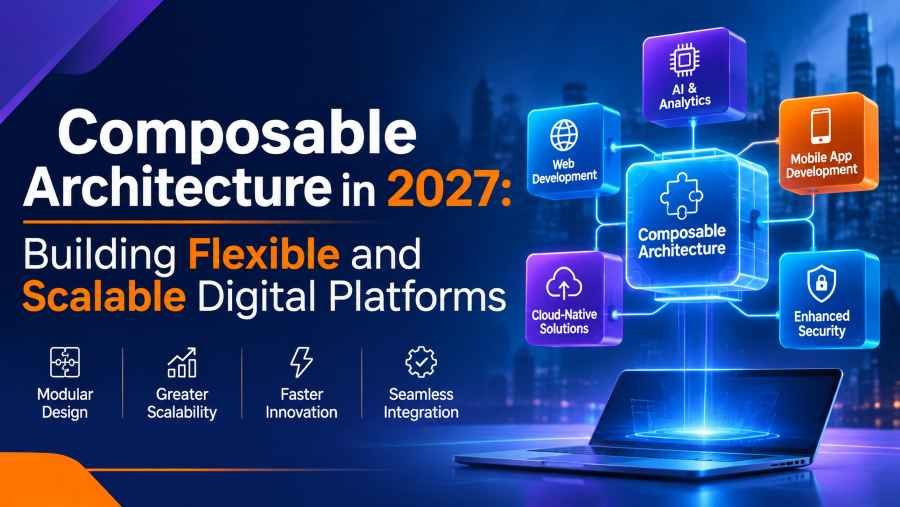
Technology changes quickly. Businesses need digital platforms that can adapt to new customer expectations, market demands and innovations. Traditional software systems often have trouble giving the flexibility and scalability that modern organisations need. That is why composable architecture is becoming a way to build modern websites, write software, and transform digital business. In 2027, businesses are increasingly looking for API‑driven technologies to create more flexible digital experiences. Composable architecture lets organisations build platforms using independent software components that work together through APIs and integrations. Instead of relying on one large system for every function, businesses can choose specialised technologies for content management, customer experiences, payments, analytics and other operations. This approach makes it easier to upgrade components, add new features, and improve overall system performance. As digital competition grows, composable architecture becomes a strategy for organisations that want to build scalable, adaptable and future‑ready digital platforms.
What Is Composable Architecture? Why Is It Important in 2027?
Composable architecture is a software development approach that lets businesses create applications and digital platforms using independent, reusable and interchangeable components. Each component performs a task and talks to other components through Application Programming Interfaces (APIs). For example, an organisation can use one platform for content management, another for customer relationship management, a payment gateway and an independent analytics solution. These technologies work together to create a digital experience without needing everything to run inside one single application. Unlike monolithic architecture, where many functions are linked inside one large system, composable architecture offers more flexibility by separating different business capabilities. One of the principles behind composable architecture is MACH architecture, which stands for Microservices, API‑first, Cloud‑native and Headless technologies. Microservices let developers split applications into independent services, while API‑first development makes communication between different systems easier. Cloud‑native technologies support infrastructure and resource management while headless architecture separates the frontend presentation layer from backend functions. Together, these principles help developers build digital platforms that can grow with business needs. In 2027, composable architecture is especially relevant for organisations investing in intelligence e‑commerce platforms, mobile applications, enterprise software and personalised customer experiences. Businesses can add technologies without rebuilding their entire digital infrastructure. This makes composable architecture an important base for software development and long‑term digital growth.
Key Benefits of Composable Architecture for Modern Businesses
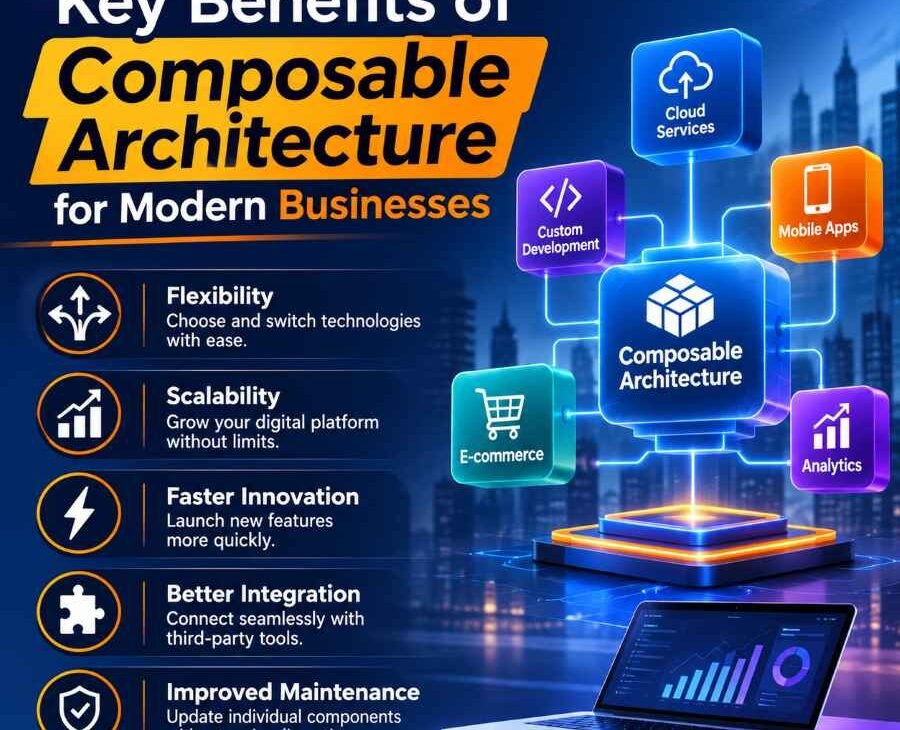
One of the advantages of composable architecture is its flexibility. Businesses can choose technologies and software components that best fit their needs instead of relying on a single platform. If a particular service becomes outdated or does not meet business expectations, developers can replace it with another solution without redesigning the application. This flexibility also speeds up innovation because development teams can add features and technologies on their own. Scalability is another benefit of composable architecture. As businesses grow, their digital platforms must handle website traffic, customer requests, transactions and data. With this architecture, individual services can be scaled to fit their needs, helping organisations manage resources more efficiently. Improved development efficiency is also possible because independent teams can work on components at the same time. For example, one team can improve the frontend experience while another develops backend services or adds a payment solution. This approach can reduce development bottlenecks. It makes software updates easier to manage. Composable architecture also supports integration with third‑party applications, cloud platforms, artificial intelligence tools and business management systems. Organisations can link their existing technologies with solutions through APIs, creating a connected digital ecosystem. From an e‑commerce point of view, businesses can independently manage product information, payment processing, customer accounts, inventory and order management. Similarly, companies that build websites and mobile applications can reuse backend services across digital channels. Security and maintenance can also benefit from component boundaries, although every integrated service needs proper authentication, monitoring and security management. However, businesses must understand that composable architecture also brings challenges, such as integration complexity, infrastructure management and the need for developers. A well‑planned architecture, APIs, proper documentation and continuous monitoring are essential for success. When implemented strategically, composable architecture helps organisations build digital platforms that support business growth and technological innovation.
Future Trends of Composable Architecture in 2027. Its Business Applications
The future of architecture in 2027 will be shaped by artificial intelligence, cloud computing, API‑driven development, headless technologies and advanced software integration. AI‑powered applications are becoming a part of digital transformation, and composable systems make it easier to connect intelligent services with existing business platforms. Companies can add AI‑powered chatbots, recommendation engines, automated customer support and predictive analytics into their ecosystems without replacing their entire software infrastructure. Headless CMS solutions are also expected to remain important because they allow businesses to manage content centrally and deliver it across websites, mobile applications, digital platforms and other customer touchpoints.
Similarly, composable commerce is helping e‑commerce businesses create custom shopping experiences by linking services for product management, checkout, payments, inventory and customer engagement. Cloud‑native development will further support architecture by providing infrastructure that can adapt to changing workloads and business requirements. Another important development is the growing use of software components and microservices, which help developers reduce repetitive work and simplify application maintenance. Businesses are also focusing on omnichannel experiences, where customers expect services across websites, mobile applications and other digital channels. Composable architecture makes this possible by connecting platforms through shared APIs and data services.
For startups, growing businesses, and large enterprises, this approach offers opportunities to modernise existing applications, improve operations, and develop innovative software solutions. However, adopting this architecture requires careful planning, technology selection and integration strategies. Businesses should evaluate their infrastructure, identify essential capabilities, and choose components that offer long‑term compatibility. Working with a website development and software development company can help organisations design suitable architecture, develop custom applications and integrate modern technologies. Nextr Technology supports businesses with development solutions, helping them build modern websites, software applications and scalable digital platforms. As technology continues to advance, investing in modular development strategies can help businesses stay competitive, improve customer experiences and prepare for future digital opportunities.
Conclusion
Composable architecture is changing the way businesses approach website development, software engineering and digital innovation. By combining components, API‑first development, microservices, cloud‑native infrastructure and headless technologies, organisations can build flexible and scalable digital platforms. In 2027, this approach will play a role in supporting AI integration, e‑commerce development, mobile applications and connected business ecosystems. Businesses that adopt a well‑planned architecture can improve development flexibility, simplify technology upgrades and respond more effectively to changing market requirements. Choosing the right development strategy and technology partner can help organisations create future‑ready solutions that support sustainable growth.
FAQs
What is architecture in software development?
Composable architecture is a software development approach that uses reusable and interchangeable components connected through APIs. It allows businesses to build digital platforms by combining specialised technologies for different functions.
What are the main benefits of this architecture?
The main benefits include improved flexibility, scalability, easier technology upgrades, faster development, better integration capabilities and the ability to select software solutions according to business requirements.
What is the difference between composable architecture?
Monolithic architecture combines functionalities into one interconnected application, whereas composable architecture separates different capabilities into independent components. This makes individual components easier to update, replace and scale.
How does MACH architecture support composable development?
MACH stands for Microservices, API‑first, Cloud‑native and Headless. These principles help developers create applications that communicate through APIs, operate independently and support flexible digital experiences.
Why should businesses adopt architecture in 2027?
Businesses should consider architecture because it supports modern digital transformation, AI integration, scalable application development, personalised customer experiences and faster adaptation to changing technology requirements.
Thank you for reading
Buy Latest Tech Gadgets and Laptops: Click Here
Buy Web Hosting at an affordable price: Buy Now.
If you want to build your website at an affordable price, contact www.nextrtechnology.com
If you want to build your website at an affordable price, contact www.nextrtechnology.com
Read more blogs: https://nextrtechnology.com/blog/