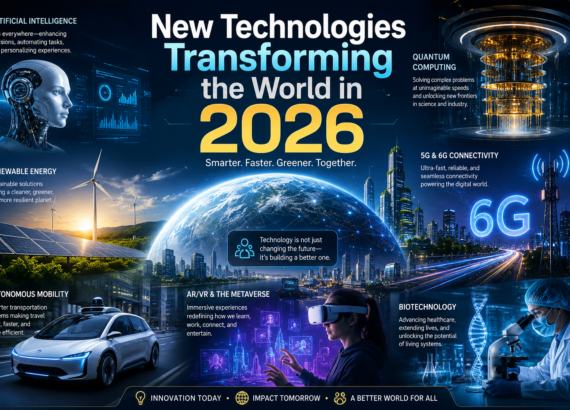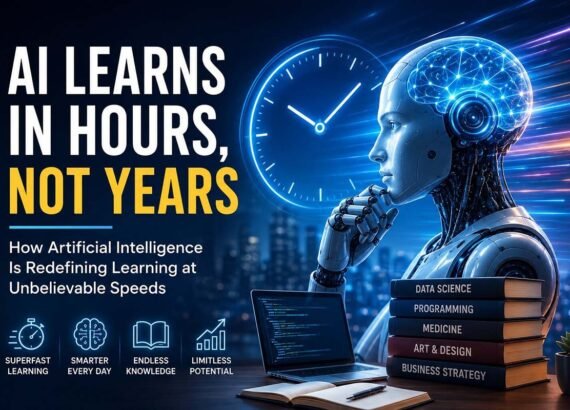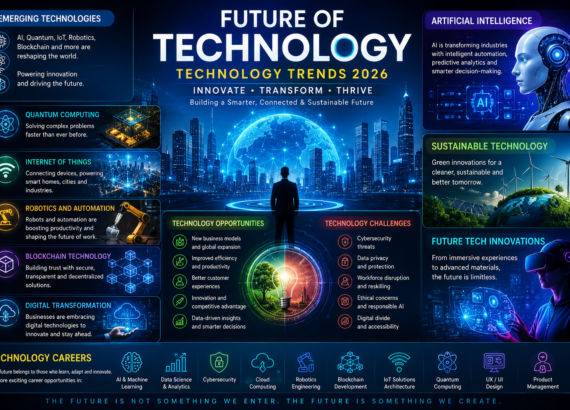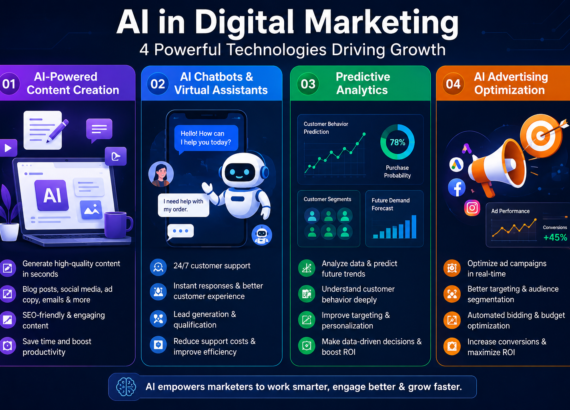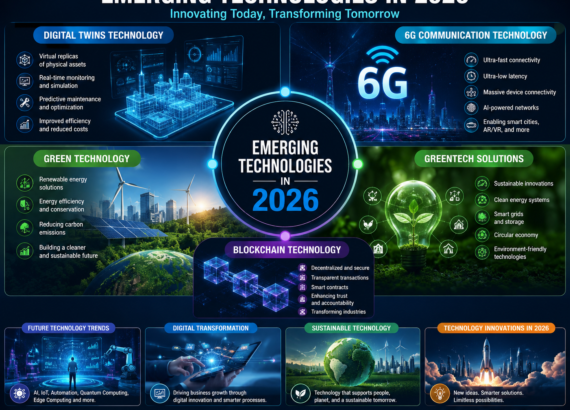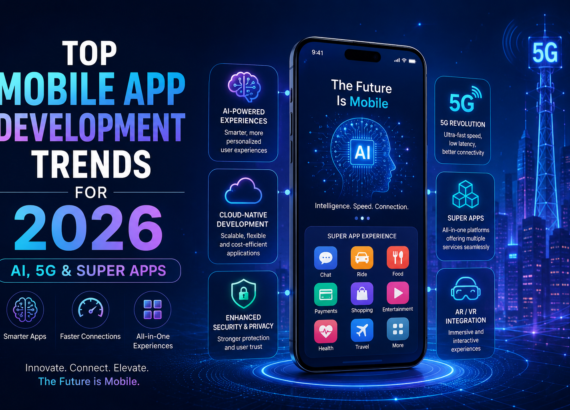
The technological landscape is evolving at an unprecedented pace, and 2026 is shaping up to be a landmark year for innovation. As we move deeper into the decade, the convergence of artificial intelligence, quantum computing, advanced cybersecurity, and sustainable tech is redefining how businesses operate and how consumers interact with the digital world. At Nextr Technology, we believe that staying ahead of the curve is not just about adopting new tools, but about understanding the strategic implications of these shifts and integrating them seamlessly into your operational framework.
From autonomous AI agents that can execute complex, multi-departmental workflows to quantum computers transitioning from theoretical lab experiments to enterprise-ready solutions, the trends of 2026 are both transformative and highly actionable. This comprehensive guide explores the most impactful technology trends of 2026, providing businesses, IT leaders, and tech enthusiasts with the insights needed to navigate the future. Whether you are a CTO planning your IT roadmap, a startup founder looking for the next big opportunity, or a tech-savvy entrepreneur, this article will equip you with the knowledge to leverage these innovations effectively and maintain a competitive edge.
1. The Rise of Agentic AI and Multi-Agent Systems
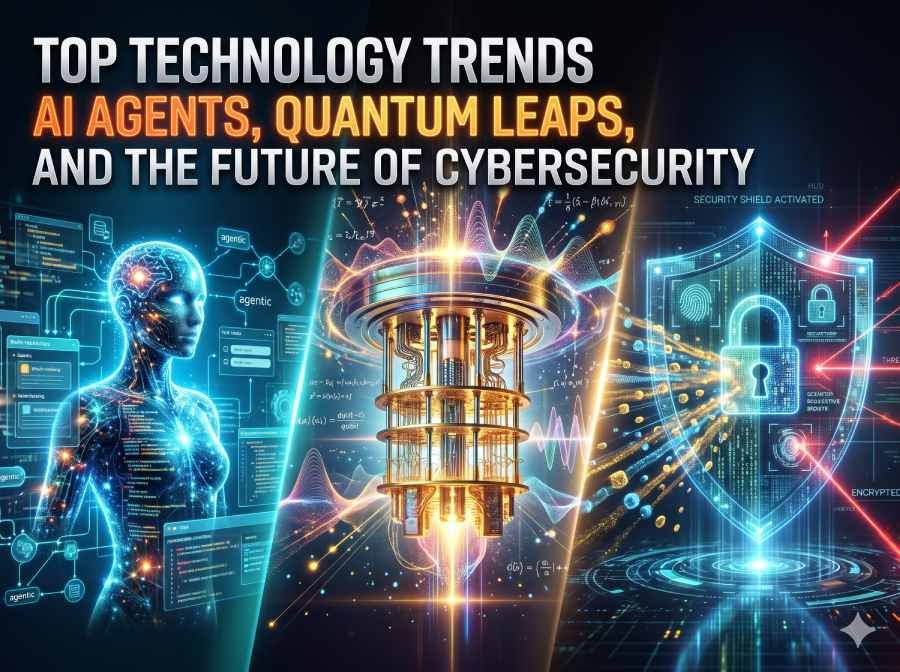
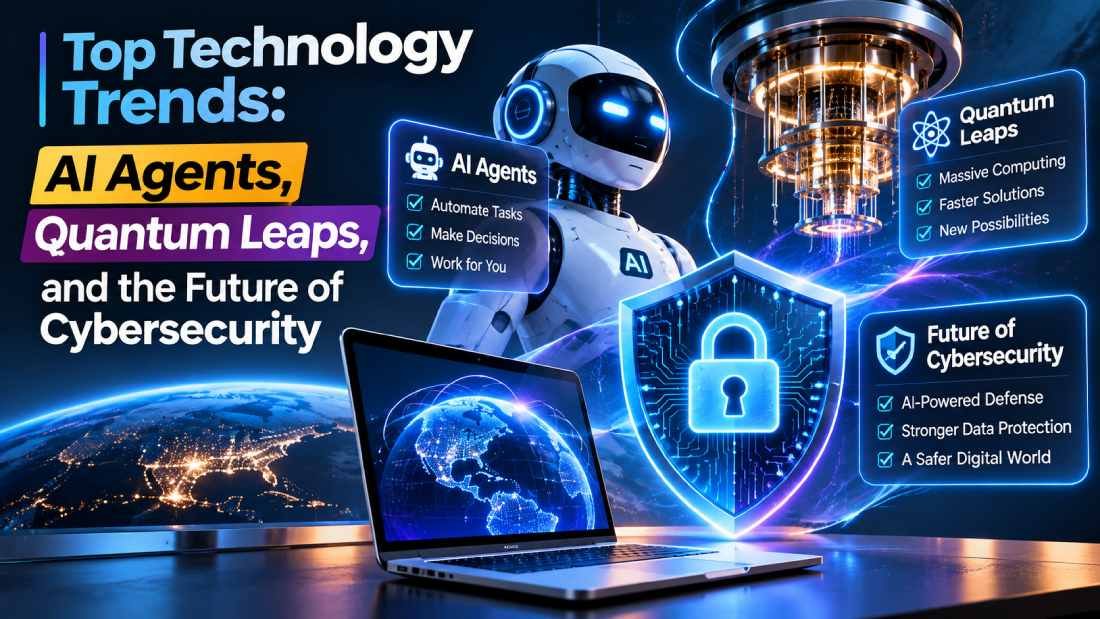
Artificial Intelligence has graduated from being a passive tool that responds to prompts to an active, autonomous partner capable of independent decision-making. In 2026, “Agentic AI” is the dominant paradigm in enterprise technology. Unlike traditional generative AI, which primarily creates content, summarises text, or answers questions, agentic AI platforms can perceive their environment, reason through complex problems, plan sequences of actions, and execute multi-step tasks without continuous human intervention.
Gartner’s technology trend playbook for 2026 highlights AI-native development platforms and multi-agent systems as top strategic priorities for modern enterprises. These systems allow multiple specialised AI agents to collaborate dynamically. For example, in a software development environment, one AI agent might write the initial codebase, another might review it for security vulnerabilities and compliance, and a third might automatically deploy it to a staging environment, all while communicating seamlessly with each other and logging the process for human oversight.
For businesses, this means a dramatic increase in operational efficiency and a reduction in mundane, repetitive tasks. Industry-specialised cloud platforms are now embedding these agentic capabilities directly into enterprise resource planning (ERP) and customer relationship management (CRM) systems. A sales agent might autonomously qualify leads, schedule meetings, and update the CRM, while a supply chain agent predicts disruptions and reroutes shipments. However, this shift also demands robust AI governance and guardrails to ensure that autonomous actions align with corporate policies, data privacy regulations, and ethical standards.
2. Quantum Computing: From Lab to Enterprise Readiness
For years, quantum computing was viewed as a distant, futuristic concept relegated to academic research labs. However, 2026 marks a critical inflexion point as quantum technology begins to meet real-world enterprise needs. The industry focus has decisively shifted from merely increasing raw qubit counts to achieving practical error correction and developing robust hybrid quantum-classical systems.
Recent breakthroughs in neutral atom quantum computing have shown significant promise, with industry leaders like Microsoft, Atom Computing, and QuEra leading efforts to deliver small, error-corrected machines capable of meaningful computation. These advancements are making it possible to solve highly complex optimisation and simulation problems that are completely intractable for even the most powerful classical supercomputers.
Industries such as pharmaceuticals, logistics, materials science, and financial services are the earliest and most aggressive adopters. In drug discovery, quantum algorithms are simulating molecular interactions with unprecedented accuracy, drastically reducing the time and capital required to identify viable drug candidates. In finance, quantum models are optimising trading portfolios, fraud detection, and risk assessment in real-time. For forward-thinking enterprises, 2026 is the year to start evaluating quantum readiness, investing in workforce upskilling, and considering hybrid strategies that integrate quantum processing units (QPUs) with existing classical cloud infrastructure.
3. Cybersecurity in 2026: Zero Trust and Quantum-Safe Defences
As technology becomes more powerful and interconnected, the threat landscape expands exponentially. The cybersecurity landscape in 2026 is characterised by AI-orchestrated, autonomous attacks and an urgent, non-negotiable need for proactive, resilient defence mechanisms. Traditional perimeter-based security models are entirely obsolete; the Zero Trust framework—operating on the core principle of “never trust, always verify”—is now the absolute baseline for enterprise security architecture.
One of the most pressing, time-sensitive challenges is the looming threat of quantum computers breaking current public-key cryptographic standards (like RSA and ECC). In response, “quantum-safe” or post-quantum cryptography (PQC) has moved from a niche academic research topic to a mainstream, board-level deployment priority. Organisations are actively auditing their digital assets, mapping data flows, and migrating to quantum-resistant algorithms to protect sensitive, long-life data against “harvest now, decrypt later” attacks orchestrated by state-sponsored actors.
Furthermore, AI-driven threat detection and automated response are becoming indispensable. Modern Security Operations Centres (SOCs) are leveraging advanced machine learning to analyse user behaviour, device activity, and network traffic in real-time, identifying subtle anomalies and zero-day exploits that human analysts might miss. Regulatory shifts are also shaping the landscape, with stricter AI governance, data sovereignty laws, and cybersecurity compliance requirements forcing companies to adopt more transparent, auditable, and accountable security practices.
4. Consumer Tech: The Shift from Smart to Truly Intelligent Homes
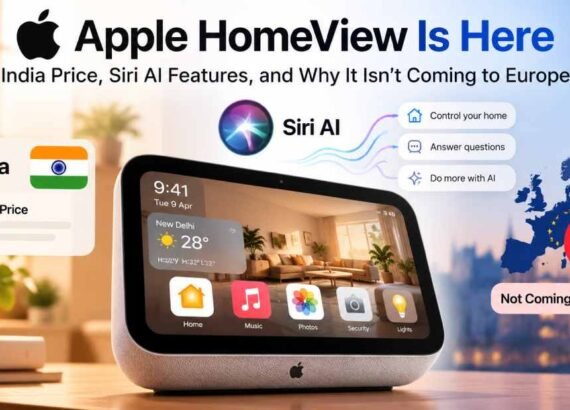
The consumer technology sector is also undergoing a massive, user-centric transformation. The outdated buzzword “smart home” is being rapidly replaced by “intelligent home.” In 2026, homes are no longer just fragmented collections of Wi-Fi-enabled devices that require manual app control; they are cohesive, context-aware ecosystems powered by ambient, on-device AI.
Top consumer tech trends highlight a strong focus on human-centric features, seamless interoperability (thanks to mature Matter protocol adoption), and the rise of domestic robots. Next-generation home assistants do not just wait for explicit voice commands; they anticipate needs based on daily routines, environmental sensors, and even biometric data. For instance, an intelligent home system might proactively adjust lighting, humidity, and temperature based on the occupant’s sleep patterns and stress levels, while a domestic robot might handle routine cleaning, laundry sorting, and pantry inventory management autonomously.
Privacy and data ownership remain paramount concerns in this domain. Consumers are increasingly demanding edge computing solutions, where sensitive data is processed locally on the home hub or device rather than being constantly transmitted to centralised cloud servers. This architectural shift not only reduces latency and improves reliability but also ensures that sensitive personal information remains secure, private, and firmly under the user’s control.
5. Sustainable Tech and Green Computing in 2026
As the computational demands of AI and quantum systems skyrocket, so does their energy consumption. Consequently, sustainable technology and “green computing” have emerged as critical trends in 2026. Organisations are under increasing pressure from investors, regulators, and consumers to reduce their carbon footprints.
This has led to innovations in energy-efficient chip architectures, advanced liquid cooling systems for data centres, and AI-driven workload optimisation that routes computations to times and locations where renewable energy is most abundant. Companies that prioritise sustainable IT practices are not only meeting regulatory ESG (Environmental, Social, and Governance) goals but are also realising significant cost savings on energy and infrastructure.
6. Strategic Takeaways: How Businesses Can Prepare
Navigating the technological shifts of 2026 requires a proactive, well-funded, and strategic approach. Here are actionable steps for businesses to stay competitive and resilient:
- Audit and Upgrade AI Governance: Establish clear, documented frameworks for the deployment of agentic AI. Ensure that human-in-the-loop mechanisms are strictly in place for critical, high-stakes decision-making processes.
- Explore Quantum Readiness: Partner with established quantum computing providers to run pilot programs on specific, high-value optimisation problems relevant to your industry, rather than waiting for universal quantum computers.
- Fortify Cybersecurity Posture: Accelerate the transition to a comprehensive Zero Trust architecture and begin the strategic migration to post-quantum cryptographic standards to future-proof your most sensitive data.
- Invest in Continuous Learning: The half-life of technical skills is shrinking rapidly. Foster a culture of continuous learning, upskilling, and cross-functional collaboration to ensure your team can effectively manage and leverage these emerging technologies.
Conclusion
The technology trends of 2026 are not just incremental software updates; they represent fundamental, paradigm-shifting changes in how we compute, secure, and interact with the digital world. Agentic AI is redefining workplace productivity, quantum computing is unlocking entirely new frontiers of scientific and business problem-solving, and advanced, quantum-safe cybersecurity frameworks are ensuring that this rapid progress remains safe and sustainable.
At Nextr Technology, we are deeply committed to helping businesses harness these powerful innovations to drive sustainable growth, operational efficiency, and long-term resilience. By staying informed, remaining agile, and strategically adapting to these trends, your organisation can turn technological disruption into your most powerful competitive advantage. The future is not just happening; it is being built today. Let Nextr Technology be your guide.
Frequently Asked Questions (FAQs)
Q1: What is Agentic AI, and how is it different from traditional Generative AI?
A1: Traditional Generative AI primarily creates content, writes code, or answers questions based on direct user prompts. Agentic AI, on the other hand, can autonomously perceive its digital environment, reason through complex, multi-variable problems, and execute multi-step tasks without continuous human intervention, acting more like a proactive digital employee.
Q2: Is quantum computing ready for mainstream business use in 2026?
A2: While universal, fault-tolerant quantum computers are still in development, 2026 marks the era of “quantum readiness.” Businesses are beginning to successfully use hybrid quantum-classical systems for specific, high-value problems like complex logistics optimisation, financial modelling, and molecular simulation, making it a strategic time to start exploring pilot programs.
Q3: Why is quantum-safe cybersecurity important right now?
A3: Threat actors are currently engaging in “harvest now, decrypt later” attacks, where they steal encrypted data with the intention of decrypting it once quantum computers become powerful enough to break current cryptographic standards (like RSA). Migrating to post-quantum cryptography (PQC) now is essential to protect long-term data confidentiality and maintain regulatory compliance.
Q4: How can Nextr Technology help my business adapt to these 2026 tech trends?
A4: Nextr Technology provides comprehensive consulting, custom implementation, and managed IT services tailored to your unique business needs. From deploying secure AI agent workflows and upgrading Zero Trust cybersecurity frameworks to guiding your quantum readiness and green computing strategies, our expert team ensures you stay ahead of the technological curve.
Q5: What is the “intelligent home” trend in consumer technology for 2026?
A5: The “intelligent home” trend moves beyond basic smart devices. It involves context-aware ecosystems powered by ambient, edge-based AI that anticipates user needs, manages domestic robots, and processes data locally to ensure maximum privacy and seamless, proactive automation.
Thank you for reading
Buy Latest Tech Gadgets and Laptops: Click Here
Buy Web Hosting at an affordable price: Buy Now.
If you want to build your website at an affordable price, contact www.nextrtechnology.com
If you want to build your website at an affordable price, contact www.nextrtechnology.com
Read more blogs: https://nextrtechnology.com/blog/