The biggest tech story of the past week was not a gadget launch. It was a security breach. According to TechRadar’s weekly roundup, cryptocurrency exchange Binance was hit by an attack that drained about $6.36 billion in tokens from the platform in roughly half an hour, making it the largest crypto theft on record.
You may not run a crypto exchange, but the lessons apply to every business with a website, an online store, a customer database or a team that logs in remotely. In this post, we explain what we know so far, why it matters in India, and nine practical steps to strengthen your website’s security.
What We Know About the Binance Hack
Details are still emerging, so it is worth sticking to what has been publicly reported. Researchers at TRM Labs linked the attack to North Korea’s Lazarus Group, and the funds were pulled across ten blockchains, including Bitcoin, Ethereum, Solana and Tron. Binance co-CEO Richard Teng confirmed the incident in a LinkedIn post.
Importantly, Teng said the attacker did not simply abuse one engineer’s permissions, and that it was not a single “one-click” action. He described a more complex attack process. The company also stated that user funds were not the target and that it would cover all losses from its SAFU emergency fund and company funds.
The takeaway is not about cryptocurrency. It is that even a well-funded technology company can be breached when attackers combine several weaknesses, such as people, permissions and systems, over time. Security failures are rarely caused by one dramatic mistake. They are usually a chain of small gaps.
This week’s wider headlines point the same way. Tech media coverage has highlighted security threats and infrastructure pressure alongside the rapid spread of AI, and reports of new cyberattacks on retail infrastructure in Europe show that attackers are targeting everyday commercial systems, not just banks.
Why This Matters for Indian Businesses
Small and mid-sized companies are attractive targets
Attackers often prefer easy targets over famous ones. An unpatched WordPress plugin, a reused password or an exposed admin login on a small business site can be exploited automatically, at scale, without anyone selecting your company by name.
India’s legal expectations are rising.
India’s Digital Personal Data Protection Act, 2023 requires organisations to maintain reasonable security safeguards for personal data, and it allows penalties of up to ₹250 crore for failures. Its rules are being phased in, so now is the time to prepare. Separately, CERT-In directions require organisations to report certain cyber incidents within six hours. Please confirm current requirements with a legal professional, as rules and timelines can change.
Trust is your most valuable asset online
A breach can cost far more than recovery. Customers lose confidence, search engines may flag compromised sites, and lost leads add up. Strong security is therefore a growth issue, not just an IT task.
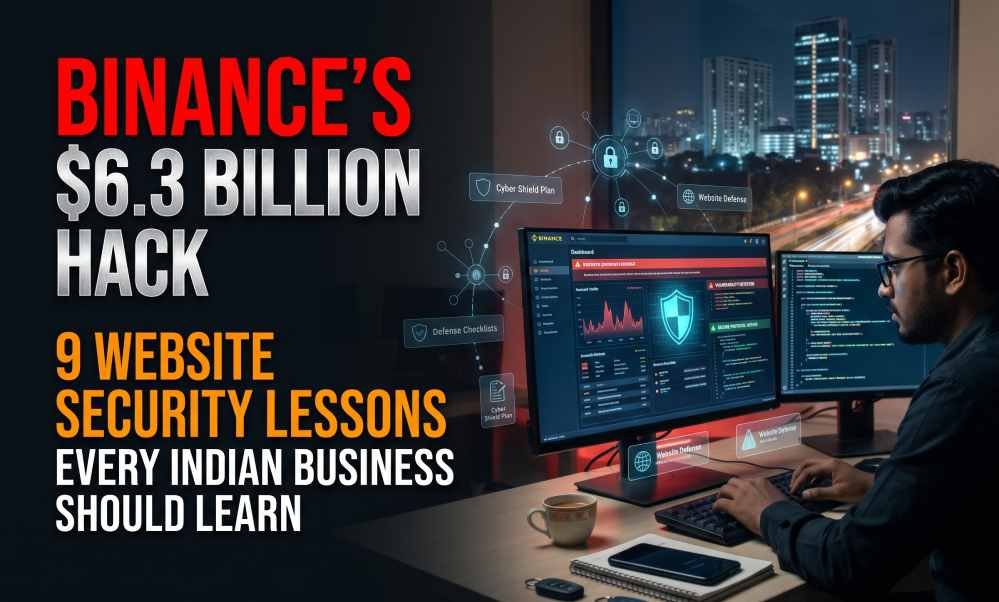
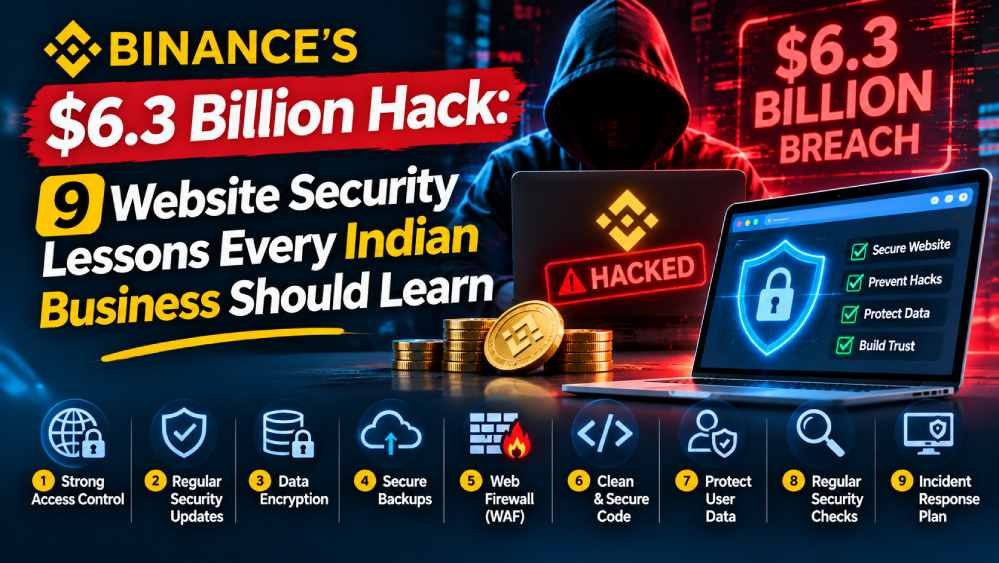
9 Website Security Lessons from the Binance Attack
1. Enforce Multi-Factor Authentication Everywhere
Passwords alone are not enough. Turn on multi-factor authentication for your CMS admin, hosting panel, domain registrar, email, payment gateway and cloud accounts. Where possible, prefer phishing-resistant options such as passkeys or hardware security keys over SMS codes.
2. Apply the Principle of Least Privilege
Binance’s statement that the attack went beyond one engineer’s permissions is a reminder that access design matters. Give every person and system only the access they need. A content writer does not need administrator rights, and a freelancer should not keep access after a project ends. Review user lists every quarter.
3. Keep Everything Updated
Outdated themes, plugins, frameworks and server software are among the most common entry points for website attacks. Schedule regular updates, remove unused plugins, and test changes on a staging site before pushing them live.
4. Protect Against Phishing and Social Engineering
Many serious breaches begin with a human, not a firewall. Train your team to spot suspicious emails, fake login pages and urgent payment requests. Run short, regular awareness sessions and make it easy for staff to report anything unusual without fear of blame.
5. Use a Web Application Firewall and Secure Hosting
A web application firewall filters malicious traffic before it reaches your site, helping block common attacks such as injection attempts and bot floods. Pair it with reputable hosting that offers isolated environments, automatic patching and DDoS protection. Cheap, shared servers with no monitoring are a false economy.
6. Encrypt Data and Always Use HTTPS
Use a valid SSL/TLS certificate on every page, encrypt sensitive data at rest, and never store card details on your own server unless you are fully compliant with payment standards. Using trusted payment gateways reduces your risk dramatically.
7. Back Up Often and Test Restores
Backups only help if they work. Keep automated daily backups stored away from your main server, and practise restoring them at least twice a year. This is your best defence against ransomware and accidental data loss.
8. Monitor, Log and Alert in Real Time
Binance’s attackers moved assets within about half an hour, which shows how quickly damage can happen. Set up alerts for unusual logins, new admin accounts, file changes and large data exports. Fast detection shrinks the damage window.
9. Prepare an Incident Response Plan
Decide in advance who does what if something goes wrong. Your plan should name a response lead, list emergency contacts, explain how to isolate affected systems, and set out how you will inform customers and regulators. Binance’s quick public confirmation and promise to cover losses show how clear communication can protect trust.
Secure by Design: Build Security into Your Website from Day One
Security is cheaper and more effective when it is part of development, not an afterthought. A security-first build includes input validation, parameterised database queries, role-based access, secure session handling, rate limiting, dependency scanning and regular code reviews.
The platform choice also affects your risk profile. Open-source CMS platforms are secure when maintained properly, while custom builds give more control but need disciplined engineering. Our comparison of WordPress vs custom website development explains how each option handles security, flexibility and maintenance.
Security should also appear on your feature checklist. Our guide to the essential features of a business website covers the trust and protection basics that every credible site needs. For the full picture of planning, building and maintaining a site, read our pillar guide on website development services for businesses in India.
If you sell online, the stakes are higher because you handle payments and personal data. Our e-commerce website development work includes secure checkout flows, trusted payment gateways and hardened admin panels. For portals, dashboards and internal tools, our custom software development team applies the same security-first approach.
A Quick Security Checklist for Your Business
- MFA is enabled on admin, hosting, domain, email and payment accounts.
- All software, themes and plugins are updated, and unused ones are removed.
- User accounts are reviewed every quarter, and former staff and vendors have no access.
- A web application firewall and HTTPS are active across the entire site.
- Automated off-site backups run daily, and a restore has been tested recently.
- Alerts are set for suspicious logins and unexpected changes.
- A written incident response plan exists, and your team knows it.
- Your privacy policy, consent forms and data practices align with the DPDP Act.
Choose a Development Partner Who Takes Security Seriously
When you hire an agency, ask direct questions about security. How do they handle updates, backups and access control? Do they run security testing before launch? What support is available if something goes wrong? Our guide on how to choose a website development company includes questions that help you separate genuine experts from sales talk.
At Nextr Technology, we build fast, secure and SEO-ready websites for businesses across India. Explore our website development services, visit our website development in Delhi page if you are in the capital region, or contact us for a security-focused review of your current website.
Conclusion
The Binance attack is a loud reminder that cybersecurity is a business priority, not a technical footnote. The details will continue to emerge, but the pattern is already familiar. Attackers look for gaps in people, permissions and systems, and they act quickly when they find them.
You do not need a huge budget to improve your position. Start with multi-factor authentication, least-privilege access, regular updates, reliable backups, monitoring and a simple incident plan. Build security into your website from the beginning, choose partners who take it seriously, and review your setup regularly. Your customers, your search rankings and your reputation all depend on it.
Frequently Asked Questions (FAQs)
1. What happened in the Binance hack?
According to TechRadar’s report, attackers withdrew about $6.36 billion in tokens from Binance within roughly half an hour. TRM Labs linked the attack to the Lazarus Group, and Binance said it would cover losses from its SAFU fund and company funds.
2. Does the Binance hack affect ordinary website owners?
Not directly, but it highlights risks that apply to every business, including weak access control, social engineering and slow detection. The same basic defences protect both large exchanges and small business websites.
3. How can I make my business website more secure?
Enable multi-factor authentication, keep software updated, limit user permissions, use HTTPS and a web application firewall, run automated backups, and monitor for unusual activity. Work with a developer who builds security into every stage.
4. Is WordPress safe for business websites?
Yes, when maintained properly. Most WordPress compromises come from outdated plugins, weak passwords or poor hosting rather than the core software. Regular updates, trusted plugins and strong access controls make a big difference.
5. What does India’s DPDP Act mean for my website?
If you collect personal data, such as contact forms, accounts or orders, you must protect it with reasonable safeguards and follow consent and privacy requirements as the rules take effect. Penalties for failures can be severe, so review your practices with a qualified legal advisor.
6. How often should I back up my website?
For most business sites, daily automated backups are a sound baseline, and high-traffic e-commerce sites may need more frequent backups. Store copies off-site and test restoring them regularly.
7. What should I do if my website is hacked?
Isolate the site, change all passwords and keys, restore from a clean backup, patch the vulnerability and scan for malware. Notify affected users and report the incident as required by law. A written response plan makes this far faster.
Thank you for reading
Buy Latest Tech Gadgets and Laptops: Click Here
Buy Web Hosting at an affordable price: Buy Now.
If you want to build your website at an affordable price, contact www.nextrtechnology.com
If you want to build your website at an affordable price, contact www.nextrtechnology.com
Read more blogs: https://nextrtechnology.com/blog/