AI-Powered Mobile Apps 2026: Features, Examples & ROI Guide
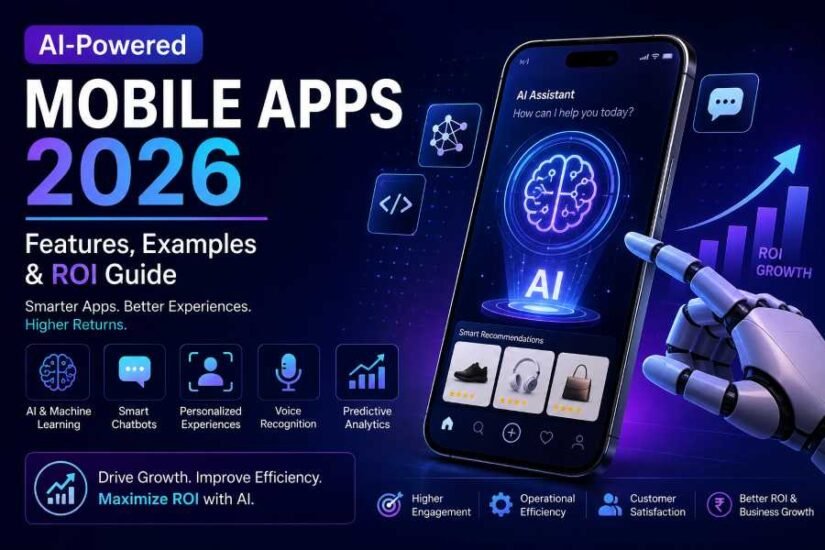
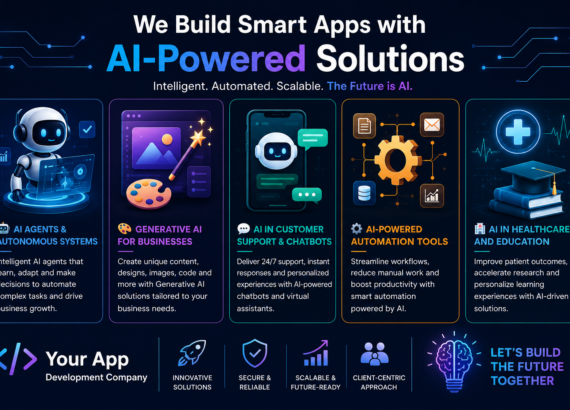
“AI-powered” has been stamped on so many apps over the past few years that the phrase nearly lost its meaning — a basic chatbot in the corner of the screen, or a recommendation carousel, was often enough to earn the label. 2026 is genuinely different. AI-powered mobile apps now see roughly 35% higher user retention and 40% better engagement compared to traditional apps, and the technology behind that gap has matured from experimental add-on into production-ready infrastructure. Apps that simply execute commands are losing ground to apps that predict, personalize, and act on a user’s behalf.
Here’s what actually defines an AI-powered app in 2026, real examples already live in the market, and a practical starting point if your business is considering building one.
What Actually Makes an App “AI-Powered” in 2026
Mobile AI has moved through three distinct generations. The first, arriving between 2018 and 2020, added predictive text, face unlock, and smart notifications — useful, but purely reactive. The second generation, from 2021 to 2023, introduced generative capabilities like drafting a message or editing a photo, still requiring the user to initiate every interaction. The third generation, defining 2025 and 2026, is agentic: apps that can interpret a goal, plan the necessary steps, and act with minimal prompting, rather than waiting to be asked.
The Defining Feature: Agentic AI That Takes Action
In productivity and enterprise apps specifically, the most valued AI capability in 2026 isn’t answering questions — it’s completing multi-step tasks. That might mean drafting and sending an email, processing an expense report from a photographed receipt, scheduling a meeting by checking multiple calendars and proposing times, or a travel app that monitors flight prices, automatically rebooks a better deal, and reorganizes your calendar to match. AI agents embedded in apps now handle an estimated 70-80% of routine customer queries without human intervention, and AI-powered document processing has been shown to reduce manual data entry errors by up to 90% in standardized workflows.
On-Device AI: Speed, Privacy, and Offline Power
Thanks to dedicated AI hardware like Apple’s Neural Engine, Google’s Tensor chips, and Qualcomm’s Snapdragon AI processors, modern smartphones now have enough inference power to run large language model features, computer vision, and real-time translation entirely offline. The benefits are substantial: near-zero latency, stronger privacy since data never has to leave the device, and lower cloud infrastructure costs for the business running the app. For apps handling sensitive information in healthcare, legal, or fintech, on-device processing has moved from a nice-to-have into something closer to a compliance requirement.
Multimodal AI: Apps That See, Hear, and Understand Together
Mobile assistants in 2026 increasingly process text, voice, and images simultaneously, not as separate features but as one connected experience. A user can photograph a product and ask specific questions about it, speak a complex query that references an earlier conversation, or upload a document for instant analysis — all within the same interaction. Screen-aware assistants take this further, recognizing exactly what a user is looking at within the app and answering questions specific to that context, rather than requiring users to describe what’s already on their screen.
Real-World Examples Already Live
This isn’t theoretical. Notion’s AI features now account for roughly half of the company’s annual recurring revenue, with its AI paid attach rate surging from around 20% to over 50% within a single year, largely by helping users draft documents, summarize long pages, extract action items from meeting notes, and generate structured content from a brief prompt. In banking, AI agents embedded in mobile apps are monitoring spending patterns, alerting users to unusual transactions, suggesting savings plans, and even pre-filling loan applications based on a user’s profile — escalating to a human advisor only when a query genuinely requires one.
Single-Agent vs. Multi-Agent Architectures
Not every AI-powered app needs the same underlying architecture. A single, well-scoped agent handling one clear task — answering support queries, or processing expense reports — is the right starting point for most small and mid-sized businesses. Larger enterprise deployments increasingly use multi-agent systems instead, where several specialized agents (one for customer queries, another for payments, a third for inventory) work together under an orchestrator agent, similar to an internal team dividing responsibilities. Multi-agent systems unlock more transformational value, but they also introduce more complexity, so most businesses are better served starting narrow and expanding once the first agent proves its worth.
The Business Case: Real ROI, Not Just Hype
The financial case for AI-powered apps has moved past speculation. Well-executed implementations have delivered 3-10x return on investment within 12-18 months, and more than 80% of enterprise apps are expected to embed some form of AI by the end of 2026, according to Gartner — including a jump in apps with task-specific AI agents from under 5% to roughly 40% in a single year. That said, ROI depends heavily on matching the AI feature to a genuine point of user friction, not adding AI capabilities simply because competitors are.
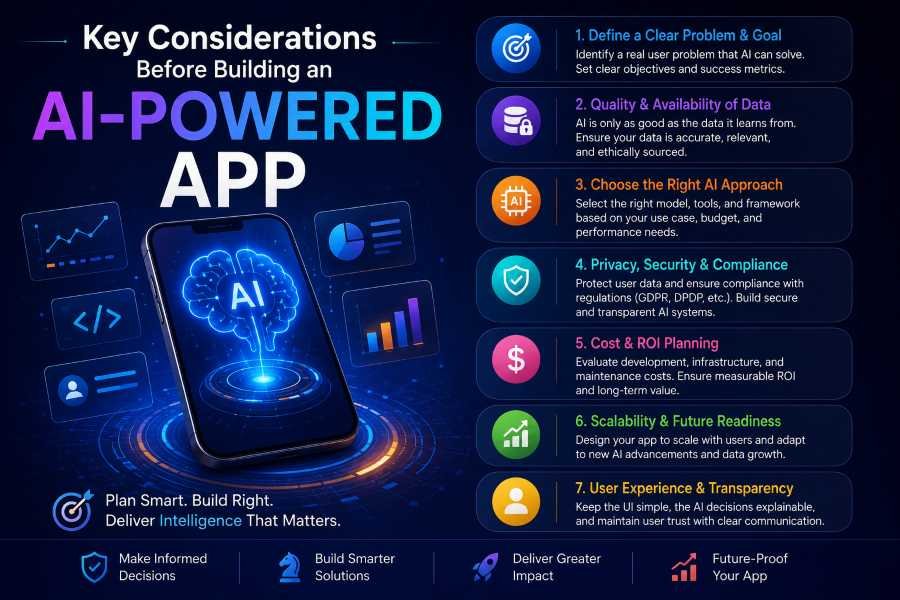
Key Considerations Before Building an AI-Powered App
- Decide early whether specific features need on-device processing (for speed, offline use, or compliance) versus cloud-based models (for more complex reasoning).
- Build data privacy into the architecture from the start, especially for any app handling healthcare, financial, or other sensitive user information.
- Choose your AI stack deliberately — options range from established generative AI APIs to dedicated agentic frameworks — based on the complexity of the tasks you’re automating, not just what’s trending.
- Start with a single, well-defined agent solving one real problem well, rather than launching multiple shallow AI features at once.
- Budget for ongoing inference costs at scale, since usage-based AI API pricing can shift the economics considerably as your user base grows.
A Practical Roadmap for Businesses
The most successful AI-powered apps in 2026 didn’t start by trying to add AI everywhere at once. They identified one genuinely high-friction task — something users or internal teams were doing manually and repeatedly — and built a focused AI feature to solve that specific problem convincingly. Once that first agent demonstrates clear value, expanding to additional tasks or a multi-agent architecture becomes a far more informed decision, backed by real usage data rather than assumptions about what users might want.
Challenges Worth Planning For
None of this comes without trade-offs. Agentic features that take real action on a user’s behalf raise the stakes on accuracy — a chatbot giving a wrong answer is an inconvenience, but an agent that books the wrong flight or sends an incorrect email is a genuine trust problem. Building in clear confirmation steps for higher-stakes actions, transparent logging of what an agent did and why, and an easy way for users to override or correct AI decisions all matter as much as the underlying AI capability itself. Cost is the other practical consideration: cloud-based inference at scale can get expensive quickly, which is part of why on-device processing has become so attractive for high-volume, lower-complexity tasks, reserving cloud calls for the queries that genuinely need deeper reasoning.
Conclusion
AI-powered mobile apps in 2026 have moved well past the marketing-badge era. The apps genuinely standing out combine agentic capabilities that take real action, on-device processing for speed and privacy, and multimodal understanding that lets users interact naturally through text, voice, or image — all backed by measurable gains in retention, engagement, and ROI. For businesses considering this path, the lesson from what’s already working is clear: start narrow, solve one real problem exceptionally well, and let proven value guide how far you expand from there, rather than chasing every AI feature at once.
Frequently Asked Questions (FAQs)
Q1. What makes a mobile app genuinely “AI-powered” in 2026, versus just marketing?
A genuinely AI-powered app in 2026 goes beyond a chatbot in the corner of the screen or a basic recommendation carousel. The real differentiator is whether the app can take multi-step action on a user’s behalf — drafting and sending an email, processing an expense report from a photo, or rebooking a flight automatically — rather than simply answering questions or suggesting content.
Q2. What is an agentic mobile app?
An agentic mobile app uses AI as a reasoning engine that can interpret a user’s goal, break it into subtasks, choose the right tools or APIs, and execute actions with minimal manual input, then learn from the results. This marks a shift from earlier AI features that only responded when a user actively opened the app and asked for something.
Q3. What are the benefits of on-device AI in mobile apps?
On-device AI runs models directly on the smartphone rather than in the cloud, which delivers near-instant responses, works offline, and keeps sensitive data on the user’s device rather than transmitting it externally. For apps in regulated industries like healthcare, legal, or fintech, on-device processing is increasingly treated as a compliance requirement rather than just a performance nicety.
Q4. Should my business build a single-agent or multi-agent AI app?
For most small and mid-sized businesses just starting their AI journey, a single, well-defined agent handling one clear task is the right entry point. Multi-agent systems, where several specialized agents coordinate under an orchestrator, are typically reserved for larger enterprise use cases with multiple interacting business functions.
Q5. What kind of ROI can businesses expect from an AI-powered mobile app?
Well-executed AI mobile app implementations have been reported to deliver 3-10x return on investment within 12-18 months, and AI-powered apps generally see meaningfully higher user retention and engagement compared to traditional apps. Actual results vary significantly based on the use case and how well the AI features are matched to a genuine user need.
Q6. How do I get started building an AI-powered app for my business?
Start by identifying one specific, high-friction task your users or team currently do manually, and design a narrow AI feature to automate just that task well, rather than trying to add AI everywhere at once. A focused single-agent prototype that solves one problem convincingly is a far stronger foundation than a broad, shallow set of AI features.
Thank you for reading
Buy Latest Tech Gadgets and Laptops: Click Here
Buy Web Hosting at an affordable price: Buy Now.
If you want to build your website at an affordable price, contact www.nextrtechnology.com
If you want to build your website at an affordable price, contact www.nextrtechnology.com
Read more blogs: https://www.nextrtechnology.com/blog/